Best time to visit Nairobi
All twelve months scored on daily temperature, rainfall, humidity and holiday crowding.
Affiliate links: we may earn a commission if you book through one, at no extra cost to you. It changes nothing above — the scores are computed from climate and fare data before any link is built.
Free, on Telegram. One tap. We write
when a fare is genuinely below what that route normally costs, and
/stop ends it.
No fare history for this route yet, so this ranking is climate and crowds only — the price column will fill in as the scanner collects.
Month by month
| Month | Max °C | Rain days | Humidity | Sun h/day | Verdict | Why |
|---|---|---|---|---|---|---|
| Jan | 26° | 4d | 62% | 11.4h | sweet spot | 26C max, 4 rainy days |
| Feb | 27° | 3d | 58% | 11.7h | sweet spot | 27C max, 3 rainy days |
| Mar | 27° | 8d | 64% | 11.0h | good | 27C max, 8 rainy days |
| Apr | 25° | 17d | 75% | 10.0h | ok | 25C max, 17 rainy days |
| May | 24° | 10d | 74% | 10.3h | good | 24C max, 10 rainy days |
| Jun | 23° | 3d | 69% | 9.6h | sweet spot | 23C max, 3 rainy days |
| Jul | 23° | 2d | 67% | 8.0h | sweet spot | 23C max, 2 rainy days |
| Aug | 23° | 2d | 66% | 8.5h | sweet spot | 23C max, 2 rainy days |
| Sep | 25° | 2d | 64% | 9.9h | sweet spot | 25C max, 2 rainy days |
| Oct | 26° | 6d | 64% | 11.1h | sweet spot | 26C max, 6 rainy days |
| Nov | 24° | 12d | 74% | 10.8h | ok | 24C max, 12 rainy days |
| Dec | 25° | 6d | 72% | 10.6h | good | 25C max, 6 rainy days |
A busy month is a crowded one, not a bad one — usually it is crowded because the weather is good. It is flagged rather than scored down, and crowds alone never make a month “avoid”: that is reserved for weather worth skipping.
Getting there
How far Nairobi is, and what it costs, depends on where you set off from — the months above do not.
- from Johannesburg
- from Riyadh
- from Doha
- from Abu Dhabi
- from Cairo
- from Dubai
- from Lagos
- from Cape Town
The year in Nairobi
No climate data available for Nairobi, so I cannot provide a detailed season profile.
Written by a language model from the climate figures above. The month-by-month table is measured — ten years of ERA5 readings and published holiday calendars — and where the two disagree, the table is the one to believe.
What Nairobi is like
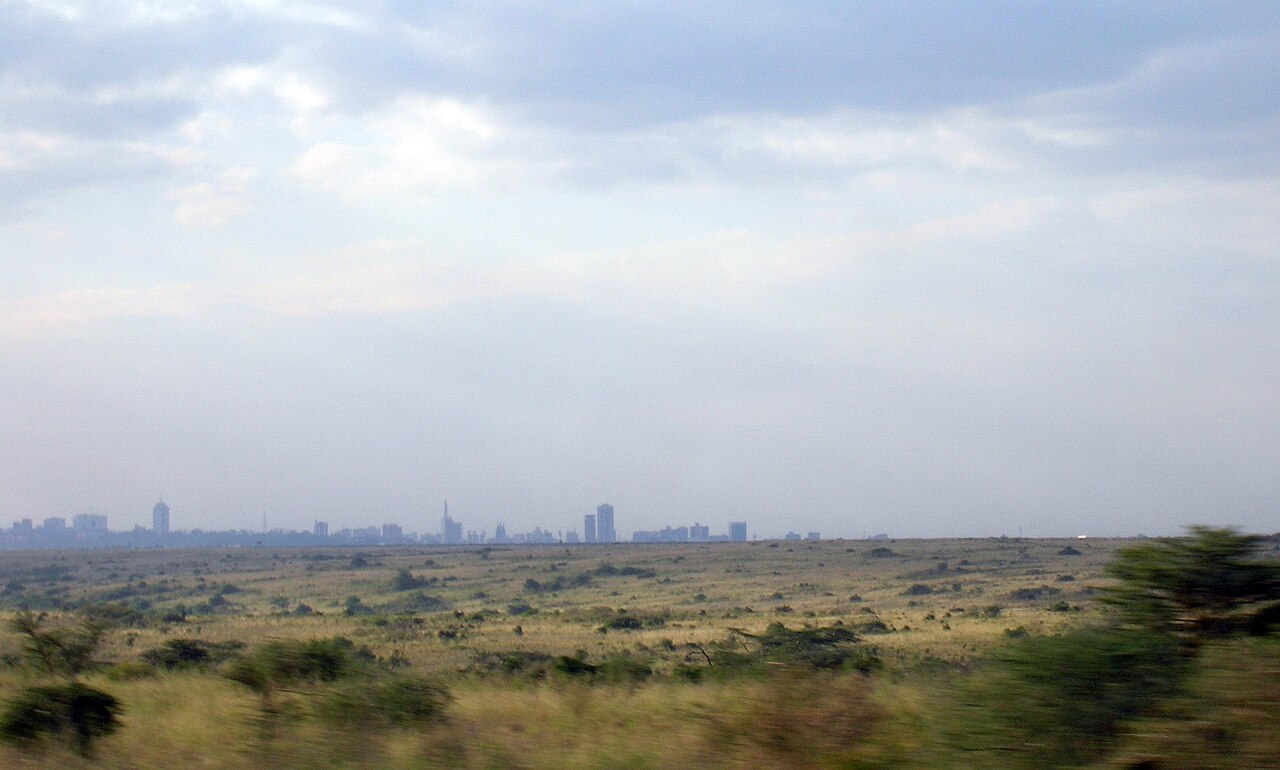
Nairobi is the political, as well as financial and media capital of Kenya. A city of 4.8 million inhabitants (as of 2024), it's the largest and fastest growing city in the country and one of Africa's largest cities. Nairobi is at the Nairobi River, and at an altitude of 1,795 m (5,889 ft) above sea level, making it one of the highest national capitals in the world. While a transit point that most travellers to Kenya will pass through, it's certainly also worth taking a few days to experience this bustling metropolis.
- Worth seeing
- Nairobi is known as the safari capital of Africa; however, the city has still managed to keep up with modernization. Unlike other cities, Nairobi is surrounded by 113 km² (70 mi²) of plains, cliffs and forest that makes up the city’s Nairobi National Park. The city is filled with many things to do during the day and the night. Tourists can have their pick from numerous safaris (wildlife, cultural, sport, adventure, scenic and specialist), ecotourism tours, restaurants, culture, shopping and entertainment. While in Nairobi, tourists can also engage in numerous sports from golf, rugby, athletics, polo, horse-racing, cricket and football (soccer).
- Worth doing
- Go-Down Arts Centre (South of Centre), ☏ +254 20 555770. A former warehouse turned arts centre - this has also happened in Nairobi and this spot allows you to get a glimpse of what contemporary Kenyan artists are up to, including exhibitions, performances and discussions. Kazuri Beads shop. Started in 1977 the workshop of beads is adjacent to Karen Blixen's Museum. It was started by an English woman to provide sustainable income to poor Kenyan women. Has beautiful jewellery created of clay brought from the areas surrounding Mt. Kenya. Village Market. Visit Village Market and Sherlocks. Try excellent food. Nairobi has a great variety of international food.
- Getting in
- For general information about visas and vaccinations, etc., see the Kenya article. 1 JKIA Jomo Kenyatta International Airport (NBO IATA) (is 15 km (9.3 mi) south-east from the centre of the city). Nairobi’s main airport, and one of Africa's largest hubs. Terminal 1A section is linked to Terminal 1B and 1C by walkways both airside and landside. Terminal 1A has a small food court upstairs airside, and there is a Nairobi Java House between the two terminals airside. Terminal 1B is completed since renovations in 2022 and it serves departures. Terminal 1C has very little except for 10 small shops all selling the same souvenirs.
- Getting around
- Be careful getting around Nairobi. Traffic is very bad like any other major city, but if you use common sense and a local or guide you should be able to get where you want. Hiring a car is convenient as it allows you the freedom to explore Nairobi at your own pace. Most rental companies in Nairobi offer self-drive and chauffeured options respectively. You will find that a large fleet of cars available for hire are Japanese: Toyota, Nissan or Mitsubishi. You can hire both automatic and manual transmission. All rental cars are right-hand drive.
- Staying safe
- Nairobi has a reputation for thievery. Beware of snatch and grab, con artists, or groups of people following you. Scams are elaborate and can involve up to 10 or more people working together. The best advice for a tourist is to stay in the city centre, know where you are at all times, and pretend you know where you're going (even if you don't). If you find yourself in an unfamiliar area your best bet is to find a taxi (although you will probably pay dearly if the driver suspects a panicked westerner!) Don't carry large quantities of money or passports on the street, and assume that anyone trying to engage you is up to no good or trying to sell you something.
- Staying healthy
- It is recommended that before tourists come to Nairobi, that they should be vaccinated well in advance (6 weeks) of their trip. The most common recommended vaccines for people traveling to Africa are tetanus, diphtheria, polio, typhoid, hepatitis A, hepatitis B, yellow fever, rabies and meningitis. Be careful with the food that you eat outside the more upscale establishments. Before eating, make sure that the food is freshly and thoroughly cooked and served hot. Also avoid seafood, except at upmarket restaurants and hotels, and make sure that your fruits and vegetables have been properly washed in clean water. The safest fruits to eat are bananas and papayas.
From the Wikivoyage article on Nairobi, written by travellers and licensed CC BY-SA 4.0; the full article has far more. The numbers above are measured; this is experience.
Before you go
| Cost of living | very cheap — prices run about 34% of the United States' (World Bank, 2025) |
|---|---|
| Currency | Kenyan shilling |
| Languages | Swahili, English |
| Plugs | Type G, 240 V |
| Driving | On the left |
| Emergency | 112, 999 |
| Calling code | +254 |
| Travel advice | avoid all travel to parts, avoid all but essential travel to parts — UK Foreign Office, updated 2026-09-04 |
Health. Before you travel check that: your destination can provide the healthcare you may need you have appropriate travel insurance for local treatment or unexpected medical evacuation This is particularly important if you have a health condition or are pregnant. Emergency medical number Dial 999 and ask for an ambulance. Contact your insurance company quickly if you’re referred to a medical facility for… More.
Facts from Wikidata (CC0), the UK Foreign Office (Open Government Licence) and the World Bank, refreshed 2026-09-23. The advisory is written for British travellers; entry rules depend on your passport.
The rest of the trip
Some links above are affiliate links: if you book through one, we may earn a commission at no extra cost to you. It does not affect the scores on this page, which are computed from climate and fare data before any link is built.