

i
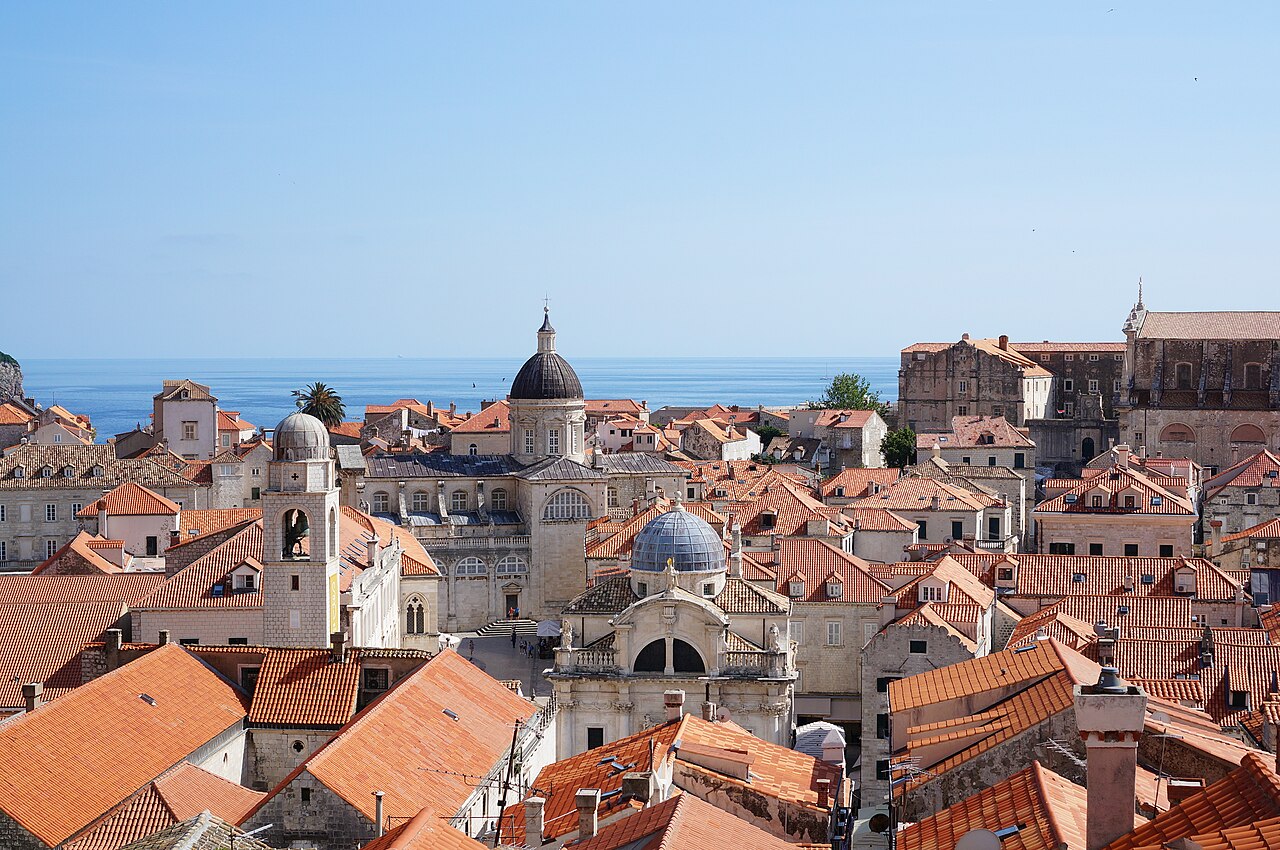
Photo by Ponor, CC BY-SA 4.0, via Wikimedia Commons.
Best time to visit Dubrovnik
Croatia · Europe
All twelve months scored on daily temperature, rainfall, humidity and holiday crowding.
The year in Dubrovnik
Tap a month for its page
- JanJDubrovnik in January: ok
- FebFDubrovnik in February: ok
- MarMDubrovnik in March: good
- AprADubrovnik in April: sweet spot
- MayMDubrovnik in May: good, busy
- JunJDubrovnik in June: sweet spot, busy
- JulJDubrovnik in July: sweet spot, busy
- AugADubrovnik in August: good, busy
- SepSDubrovnik in September: good, busy
- OctODubrovnik in October: good
- NovNDubrovnik in November: ok
- DecDDubrovnik in December: ok
- Sweet spot
- Good
- OK
- Avoid
- Busy
Plan this trip
Each site opens on its own search: choose your dates there. A few open on their home page, where you type the place too.
Links marked Ad pay us a commission if you book, at no extra cost to you; most pay nothing, and what a site pays never decides whether it is listed or where. How we rank
Flights from
Flights
Your city is a guess from your time zone. Choose your city
Where are you flying from? Choose your city for its flights and fares.
Book with the airline
Where to stay
Book direct
Luxury
Things to do
Car hire
Rent direct
Travel insurance
Check whether your bank card or home insurance already covers this trip.
If the trip needs a visa, the travel agent or visa centre usually sells the cover it asks for.
Mobile data (eSIM)
Your own plan's EU roaming may already cover this.
Renting a pocket Wi-Fi is the other common way to stay connected.
These are sites people in book with. Each opens in a new tab, on the site's own pages.
Things to do in Dubrovnik
- Rector's Palace The former palace of the Major Council houses a museum dedicated to the city's history.
- Fort Lovrijenac The monumental fort rises above 37 m high rock.
- Cathedral of the Assumption of the Virgin Mary This impressive building is in the Poljana Marin Držić.
- Church of Saint Blaise Baroque Church dedicated to the city's patron saint.
- Sponza Palace Gothic Renaissance palace, one of the few buildings that has maintained its form from…
- Synagogue and Jewish Museum This synagogue built by Sephardic Jews is supposed to be the second-oldest still in use…
- Franciscan Monastery This beautiful monastery with Baroque Church…
Tours and tickets in Dubrovnik
Each site opens on its own search: choose your dates there. A few open on their home page, where you type the place too. Links marked Ad pay us a commission if you book, at no extra cost to you; most pay nothing, and what a site pays never decides whether it is listed or where. How we rank
Sights and their lines from Wikivoyage (Dubrovnik), licensed CC BY-SA 4.0; in order of how often each one's Wikipedia article was read on phones in the last 12 months.
Month by month
No fare history for this route yet, so this ranking is climate and crowds only — the price column will fill in as the scanner collects.
| Month | Max °C | Rain days | Humidity | Sun h/day | Verdict | Why |
|---|---|---|---|---|---|---|
| Jan | 12° | 12d | 71% | 6.3h | ok | 12C max, 12 rainy days |
| Feb | 13° | 9d | 71% | 7.5h | ok | 13C max, 9 rainy days |
| Mar | 15° | 9d | 67% | 9.0h | good | 15C max, 9 rainy days |
| Apr | 18° | 8d | 66% | 10.6h | sweet spot | 18C max, 8 rainy days |
| May | 22° | 9d | 69% | 11.9h | goodbusy | busier than usual |
| Jun | 27° | 3d | 67% | 13.4h | sweet spot busy | busier than usual |
| Jul | 30° | 2d | 59% | 13.7h | sweet spot busy | busier than usual |
| Aug | 31° | 2d | 60% | 13.0h | goodbusy | busier than usual |
| Sep | 26° | 6d | 67% | 10.8h | goodbusy | busier than usual |
| Oct | 21° | 7d | 74% | 9.3h | good | 21C max, 7 rainy days |
| Nov | 17° | 13d | 75% | 6.3h | ok | 17C max, 13 rainy days |
| Dec | 14° | 12d | 73% | 5.9h | ok | 14C max, 12 rainy days |
Rain days are the days with at least 1 mm of rain, as a weather station counts them.
Weather read at the Stradun, the old town, 16 km from the airport (DBV): ten years of ERA5 and ERA5-Land reanalysis, through Open-Meteo's open data.
A busy month is a crowded one, not a bad one — usually it is crowded because the weather is good. It is flagged rather than scored down, and crowds alone never make a month “avoid”: that is reserved for weather worth skipping.
How busy it gets
Then and now
Dubrovnik's June days now average 27.3°C, 3.4°C warmer than in 1981–1990. 9 of 12 months are clearly warmer.
| Jan | Feb | Mar | Apr | May | Jun | Jul | Aug | Sep | Oct | Nov | Dec | |
|---|---|---|---|---|---|---|---|---|---|---|---|---|
| 1981–90 | 10.4° | 10.8° | 13.6° | 16.7° | 20.7° | 23.9° | 27.7° | 27.6° | 24.7° | 20.2° | 14.6° | 11.5° |
| 2017–26 | 11.6° | 13.1° | 14.9° | 18.0° | 22.0° | 27.3° | 30.1° | 30.7° | 26.1° | 21.4° | 17.0° | 13.5° |
| Change | +1.2° | +2.3° | +1.3° | +1.3° | +1.4° | +3.4° | +2.4° | +3.1° | +1.4° | +1.2° | +2.5° | +2.1° |
The average daily high, month by month, for the nearest ERA5 grid cell. Bold is a clear change; grey is within the ordinary spread between years. Every destination, ranked.
Getting there
How far Dubrovnik is, and what it costs, depends on where you set off from — the months above do not.
Open in Rome2rio for every way from to Dubrovnik, flying or not.
Before you go
| Cost of living | cheap — prices run about 53% of the United States' (World Bank, 2025) |
|---|---|
| Currency | Euro |
| Languages | Croatian |
| Plugs | Type C and F, 230 V |
| Driving | On the right |
| Calling code | +385 |
| Travel advice | No advice against travel — UK Foreign Office, updated 2026-08-11 Exercise normal security precautions — Global Affairs Canada, updated 2026-10-05 Level 1: Exercise Normal Precautions — US State Department, updated 2026-05-18 |
| Health | UK Foreign Office health advice |
Facts from Wikidata (CC0), the UK Foreign Office (Open Government Licence) and the World Bank, refreshed 2026-10-07. The advisory is written for British travellers; entry rules depend on your passport.Travel advice for American readers is the US State Department's (public domain), and for Canadian readers Global Affairs Canada's (Open Government Licence - Canada), each in its own words and written for its own citizens; entry rules depend on your passport.
Being there
On arrival
- Paying — Cards are accepted almost everywhere, though people in Croatia still use cash for over half of payments in shops. For cash, use a bank's ATM rather than a Euronet machine, which can charge high fees.
- UPI, for visitors from India — Not accepted for paying here; bring a card that works abroad.
- Tipping — Service is not included: round up for drinks, leave 5 to 10% for a meal, and let taxi drivers keep the change.
Getting around Dubrovnik
On Libertas city buses a ticket from the driver costs €2.50 for one ride. A 1-hour ticket (€1.73), day ticket (€5.31) or 3-day ticket (€11.95) from a kiosk or a Libertas sales point such as Pile is cheaper, and runs from when it is first registered on the bus. From the airport, the Platanus shuttle (€10 one way) leaves about 30 minutes after each arrival for the Old Town's Ploče gate and the Gruž bus station.
- Apps — Rides: Bolt, Uber. Maps: Google Maps, Apple Maps. Messages: WhatsApp, Messenger, Viber.
The Old Town is completely pedestrianized. It consists of a main street that runs East-West. More on Wikivoyage
From the Wikivoyage article on Dubrovnik, written by travellers and licensed CC BY-SA 4.0.
Help
- Emergency — 112 (any emergency).
TravelCharika is not an emergency service: we cannot call for help or send anyone. Numbers can change; if one fails, ask someone local or your hotel.
Your embassy — : how to reach your embassy or consulate abroad. A guess from your city, : a city is not a passport.
Put together by hand from the sources listed, checked 7 October 2026. Apps, cards and rules change, so check before you rely on one.
Sources (15)
- gov.uk/foreign-travel-advice/croatia/getting-help
- libertasdubrovnik.hr/en/price-list
- libertasdubrovnik.hr/en/prodajno-mjesto
- experiencedubrovnik.com/en/plan-your-trip-2/getting-around-the-city
- platanus.hr/dubrovnik-airport-shuttle
- bolt.eu/en/cities/dubrovnik
- uber.com/global/en/r/cities/dubrovnik-dubrovnik-hr
- hakom.hr/UserDocsImages/2026/izvjesca_i_planovi/Izvje%C5%A1%C4%87e_kori%C5%A1tenje_i_zadovoljstvo_internetskim_uslugama_2025_usporedba_20260116.pdf?vel=1754982
- ecb.europa.eu/stats/ecb_surveys/space/html/ecb.space2024~19d46f0f17.en.html
- en.wikivoyage.org/wiki/Dubrovnik
- en.wikivoyage.org/wiki/Croatia
- developers.google.com/maps/coverage
- apple.com/ios/feature-availability
- pib.gov.in/PressReleasePage.aspx?PRID=2286608
- rbidocs.rbi.org.in/rdocs/AnnualReport/PDFs/09PAYMENT290526C6588B796E664822A2BD0DEB6452CAD4.PDF
Dubrovnik in pictures
i
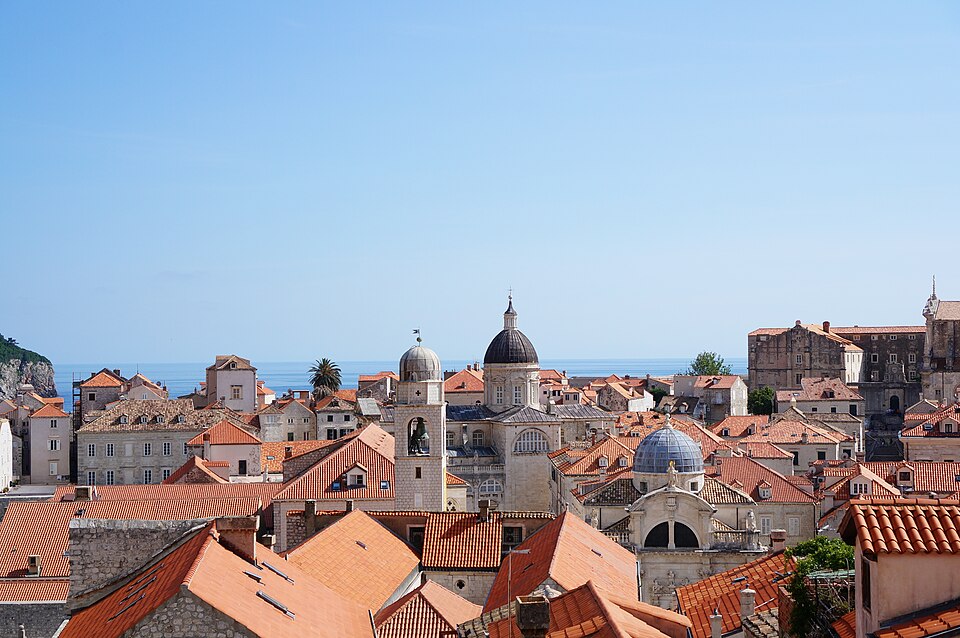
Ponor, CC BY-SA 4.0, via Wikimedia Commons
i
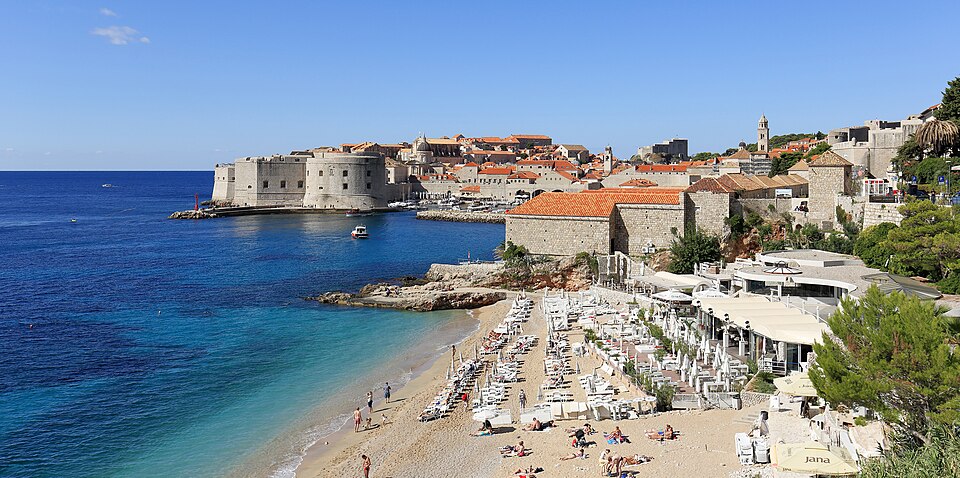
Martin Falbisoner, CC BY-SA 4.0, via Wikimedia Commons
i
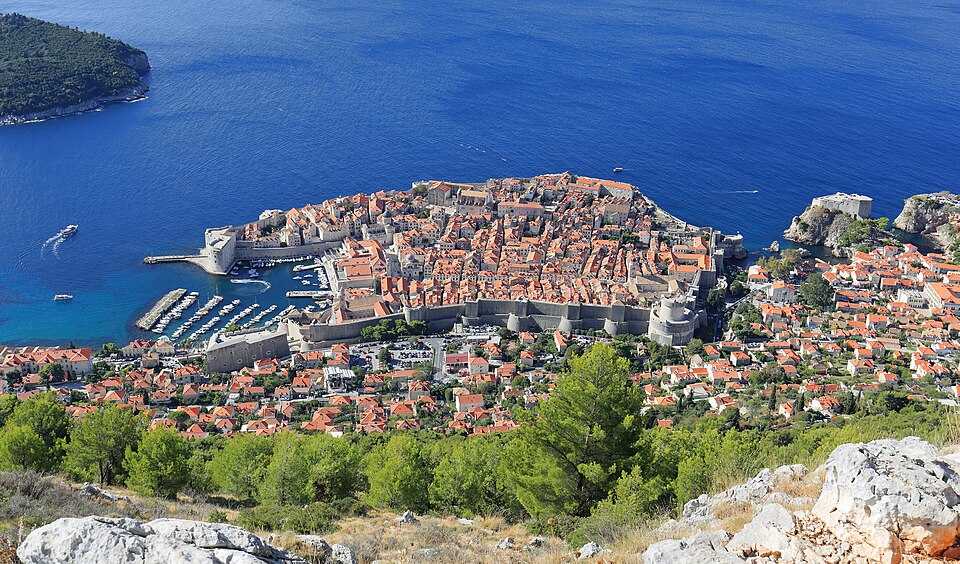
Martin Falbisoner, CC BY-SA 4.0, via Wikimedia Commons
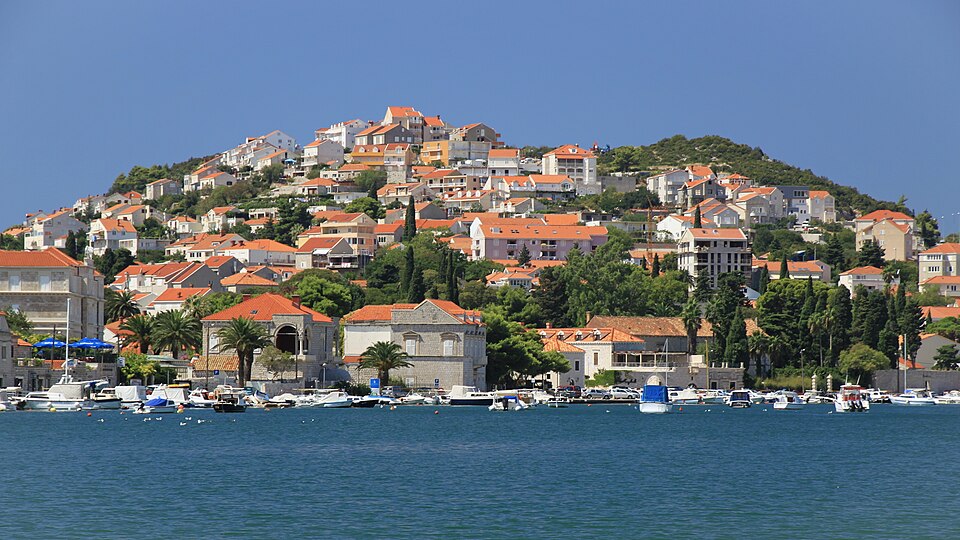
i
Marcin Konsek, CC BY-SA 4.0, via Wikimedia Commons
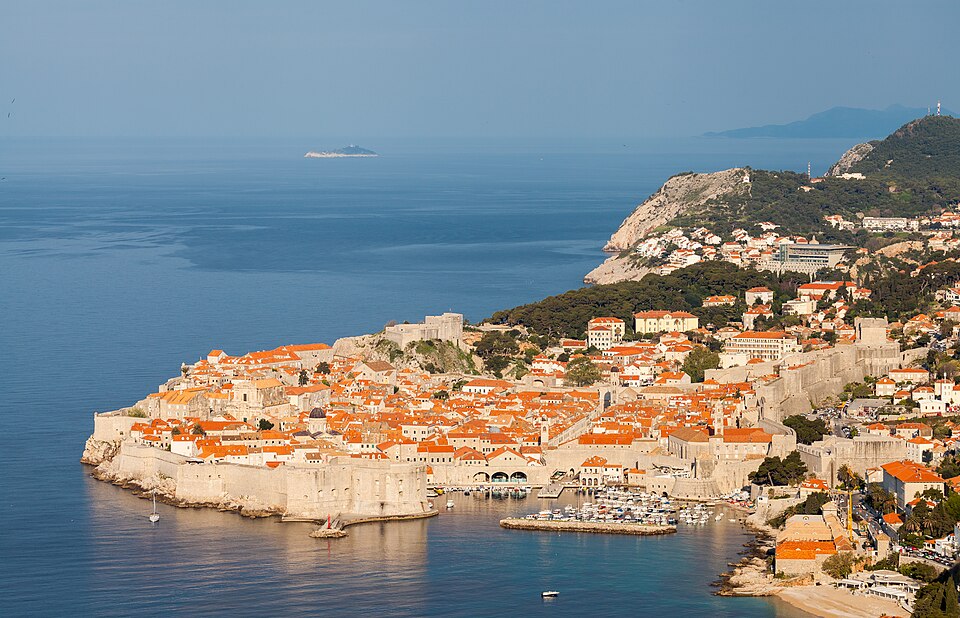
i
Diego Delso, CC BY-SA 3.0, via Wikimedia Commons
What Dubrovnik is like
Dubrovnik is a historic walled city on the Adriatic Sea coast in the extreme south of Croatia. It is one of the most prominent tourist destinations in the Mediterranean, a seaport and the centre of the Dubrovnik-Neretva County. Its population is about 65,000 in the greater Dubrovnik metropolitan area as of 2025. More on Wikivoyage
- Worth seeing
- The Dubrovnik Pass (Summer: €40 one day, €50 three days, €60 seven days/ Winter: €15 one day, €25 three days, €35 seven days) is worth considering, as it is only €5 more than the entry to the City Walls… More on Wikivoyage
- Worth doing
- Lazareti, Frana Supila 8 (Ploce, just outside of the east entrance to the Old town). Old quarantine hospital serves as a cultural centre for concerts, exhibitions, workshops, theater, film, night clubs and literature. More on Wikivoyage
- Getting in
- Dubrovnik Airport (DBV IATA) (is about 20 km (12 mi) to the south of the city.). More on Wikivoyage
- Staying safe
- Dubrovnik is a very safe city, though the usual precautions should be taken to protect yourself from pick-pocketing. More on Wikivoyage
From the Wikivoyage article on Dubrovnik, written by travellers and licensed CC BY-SA 4.0; the full article has far more. The numbers above are measured; this is experience.
Around Dubrovnik
Nearby
- Sarajevo Bosnia and Herzegovina · 138 km
- Belgrade Serbia · 307 km
- The Amalfi Coast Italy · 367 km
- Naples Italy · 378 km
Kind of place
Dubrovnik is in Croatia, Europe. Distances are great-circle, so a short one can still be a long way round.
Check your inbox. A confirmation is on its way: open the link in it, press Confirm, and you are subscribed.
That did not go through. Check the address, or try again in a minute.
Already sent. A confirmation went to that address in the last day: look for it, spam folder included. Its link works for three days.
You are not on the list until you confirm from your inbox. The list lives with our email provider, Resend; the privacy page says the rest.
Links marked Ad pay us a commission if you book through one, at no extra cost to you. That does not affect the scores on this page, which are computed from climate and fare data before any link is built.