

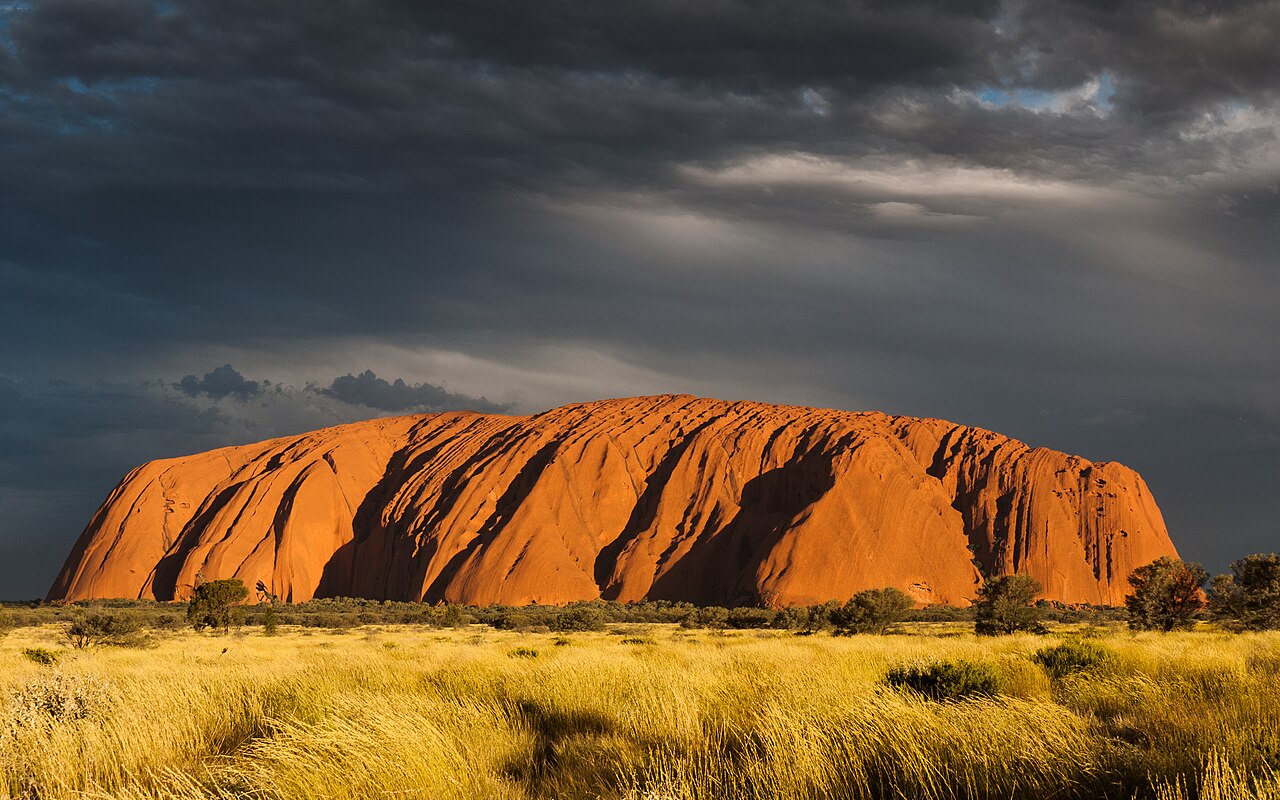
Best time to visit Uluru
Australia · Oceania
All twelve months scored on daily temperature, rainfall, humidity and holiday crowding.
The year in Uluru
Tap a month for its page
- JanJUluru in January: avoid
- FebFUluru in February: avoid
- MarMUluru in March: avoid
- AprAUluru in April: sweet spot
- MayMUluru in May: good
- JunJUluru in June: sweet spot
- JulJUluru in July: good, busy
- AugAUluru in August: sweet spot
- SepSUluru in September: sweet spot
- OctOUluru in October: avoid
- NovNUluru in November: avoid
- DecDUluru in December: avoid
- Sweet spot
- Good
- OK
- Avoid
- Busy
Plan this trip
Each site opens on its own search: choose your dates there. A few open on their home page, where you type the place too.
Links marked Ad pay us a commission if you book, at no extra cost to you; most pay nothing, and what a site pays never decides whether it is listed or where. How we rank
Flights from
Flights
Your city is a guess from your time zone. Choose your city
Where are you flying from? Choose your city for its flights.
Book with the airline
Where to stay
Book direct
Luxury
Things to do
Car hire
Travel insurance
Check whether your bank card or home insurance already covers this trip.
If the trip needs a visa, the travel agent or visa centre usually sells the cover it asks for.
Mobile data (eSIM)
Your own plan's EU roaming may already cover this.
Renting a pocket Wi-Fi is the other common way to stay connected.
These are sites people in book with. Each opens in a new tab, on the site's own pages.
Month by month
| Month | Max °C | Rain days | Humidity | Sun h/day | Verdict | Why |
|---|---|---|---|---|---|---|
| Jan | 37° | 3d | 33% | 11.6h | avoid | extreme heat: 24 days over 35C |
| Feb | 36° | 2d | 30% | 11.9h | avoid | extreme heat: 20 days over 35C |
| Mar | 34° | 1d | 33% | 10.4h | avoid | extreme heat: 16 days over 35C |
| Apr | 29° | 1d | 34% | 10.4h | sweet spot | 29C max, 1 rainy day |
| May | 23° | 1d | 42% | 9.7h | good | 23C max, 1 rainy day |
| Jun | 20° | 1d | 48% | 9.5h | sweet spot | 20C max, 1 rainy day |
| Jul | 21° | 1d | 44% | 10.2h | goodbusy | busier than usual |
| Aug | 24° | 1d | 35% | 10.5h | sweet spot | 24C max, 1 rainy day |
| Sep | 28° | 2d | 29% | 10.9h | sweet spot | 28C max, 2 rainy days |
| Oct | 32° | 2d | 30% | 11.3h | avoid | extreme heat: 10 days over 35C |
| Nov | 34° | 2d | 33% | 11.6h | avoid | extreme heat: 13 days over 35C |
| Dec | 37° | 1d | 28% | 11.9h | avoid | extreme heat: 22 days over 35C |
Rain days are the days with at least 1 mm of rain, as a weather station counts them.
Weather read at Yulara (Ayers Rock Resort), outside the park, 6 km from the airport (AYQ): ten years of ERA5 and ERA5-Land reanalysis, through Open-Meteo's open data.
A busy month is a crowded one, not a bad one — usually it is crowded because the weather is good. It is flagged rather than scored down, and crowds alone never make a month “avoid”: that is reserved for weather worth skipping.
How busy it gets
Then and now
Uluru's July days now average 20.6°C, 2.4°C warmer than in 1981–1990. 2 of 12 months are clearly warmer.
| Jan | Feb | Mar | Apr | May | Jun | Jul | Aug | Sep | Oct | Nov | Dec | |
|---|---|---|---|---|---|---|---|---|---|---|---|---|
| 1981–90 | 36.6° | 35.8° | 32.2° | 28.2° | 23.1° | 18.5° | 18.2° | 22.3° | 27.1° | 32.0° | 34.7° | 36.4° |
| 2017–26 | 37.5° | 36.5° | 34.4° | 29.2° | 23.0° | 19.9° | 20.6° | 23.7° | 28.3° | 32.3° | 33.7° | 36.7° |
| Change | +0.9° | +0.6° | +2.2° | +1.0° | -0.0° | +1.4° | +2.4° | +1.4° | +1.2° | +0.4° | -1.0° | +0.3° |
The average daily high, month by month, for the nearest ERA5 grid cell. Bold is a clear change; grey is within the ordinary spread between years. Every destination, ranked.
Getting there
How far Uluru is depends on where you set off from — the months above do not.
- from Perth
- from Melbourne
- from Sydney
- from Brisbane
- from Jakarta
- from Singapore
- from Auckland
- from Kuala Lumpur
Open in Rome2rio for every way from to Uluru, flying or not.
Before you go
Type I plugs at 230 V. Drives on the left. The currency is the Australian dollar. No UK Foreign Office advice against travel. Global Affairs Canada: Exercise normal security precautions. US State Department: Level 1: Exercise Normal Precautions. Everything for Australia: cost of living, languages, emergency numbers and health.
Being there
On arrival
- Paying — Visa, Mastercard, Apple Pay and Google Pay are taken in most shops, cafés and hotels; carry some cash in remote areas. Since 1 October 2026 shops may not add a fee for paying by card; taxis follow their state's rules.
- UPI, for visitors from India — Not accepted for paying here; bring a card that works abroad.
- Tipping — Not expected; prices include service. In upmarket restaurants 10% for good service is common. Taxi drivers do not expect tips.
Getting around Uluru
- Apps — Rides: DiDi, Uber. Maps: Google Maps, Apple Maps. Messages: Messenger, Text messages (SMS), WhatsApp.
The big rocks are actually a little distance from Yulara, where the accommodation and facilities are. If you are not with a tour, or didn't bring your car, you will need to decide how best to get to these locations. More on Wikivoyage
From the Wikivoyage article on Uluṟu-Kata Tjuṯa National Park, written by travellers and licensed CC BY-SA 4.0.
Help
- Emergency — 000 (any emergency).
TravelCharika is not an emergency service: we cannot call for help or send anyone. Numbers can change; if one fails, ask someone local or your hotel.
Your embassy — : how to reach your embassy or consulate abroad. A guess from your city, : a city is not a passport.
Put together by hand from the sources listed, checked 7 October 2026. Apps, cards and rules change, so check before you rely on one.
Sources (25)
- gov.uk/foreign-travel-advice/australia/getting-help
- australia.com/en-us/facts-and-planning/about-australia/useful-tips.html
- rba.gov.au/payments-and-infrastructure/review-of-retail-payments-regulation/2026-03/non-tech-summary.html
- rba.gov.au/payments-and-infrastructure/review-of-retail-payments-regulation/2026-03/conclusions-paper/faqs
- transportnsw.info/tickets-fares/fares/best-ways-for-visitors-to-pay
- transportnsw.info/tickets-fares/contactless-payments
- premier.vic.gov.au/tap-and-go-here
- premier.vic.gov.au/tap-and-go-arrives-trams
- premier.vic.gov.au/tap-and-go-rolling-out-buses
- transperth.wa.gov.au/Contactless-Payments
- transperth.wa.gov.au/tickets-fares/fares
- uber.com/global/en/cities/sydney
- web.didiglobal.com/au/help-center/where-is-didi-available
- accc.gov.au/media-release/surge-in-online-messaging-use-as-big-digital-platforms-continue-to-expand
- en.wikivoyage.org/wiki/Australia
- infobip.com/blog/most-popular-messaging-apps-by-country
- developers.google.com/maps/coverage
- apple.com/ios/feature-availability
- translink.com.au/tickets-and-fares/fares-and-zones/south-east-queensland
- translink.com.au/tickets-and-fares/contactless-payments
- translink.com.au/tickets-and-fares/50-cent-fares
- statements.qld.gov.au/statements/105394
- translink.com.au/travel-with-us/airport-services
- pib.gov.in/PressReleasePage.aspx?PRID=2286608
- rbidocs.rbi.org.in/rdocs/AnnualReport/PDFs/09PAYMENT290526C6588B796E664822A2BD0DEB6452CAD4.PDF
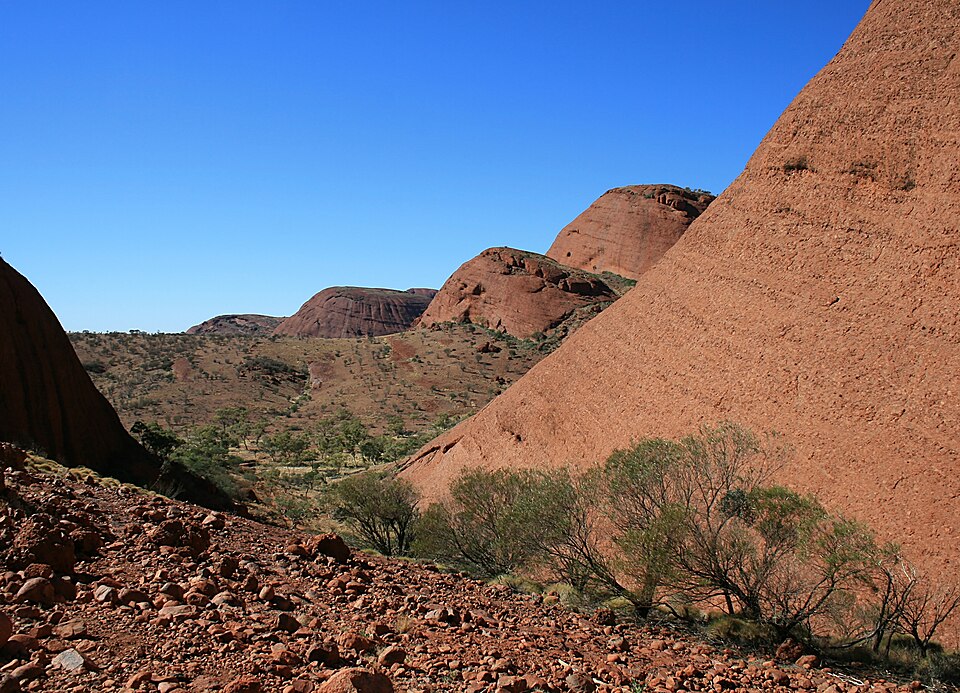
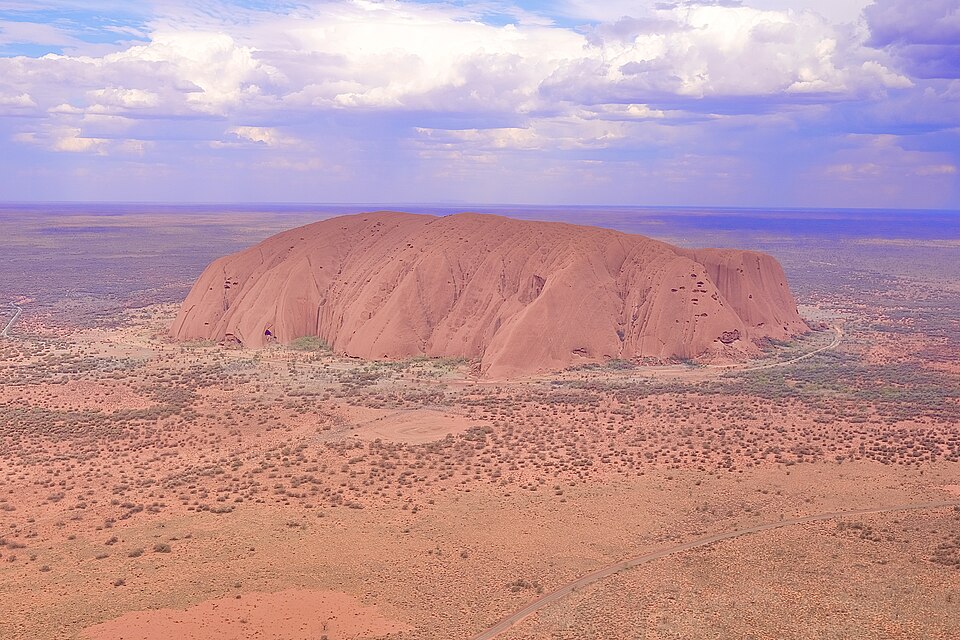
Uluru in pictures
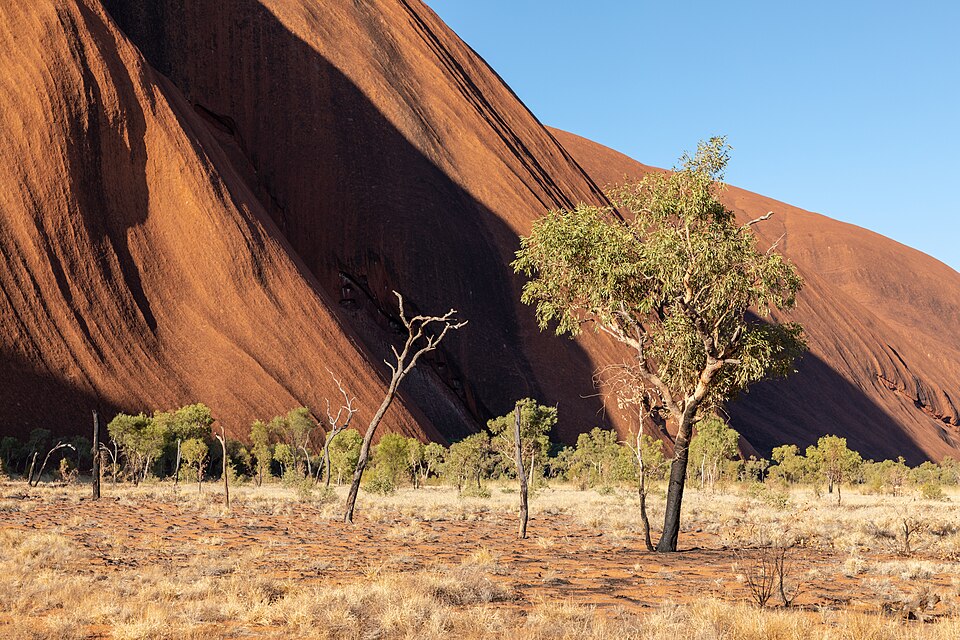
i
Dietmar Rabich, CC BY-SA 4.0, via Wikimedia Commons
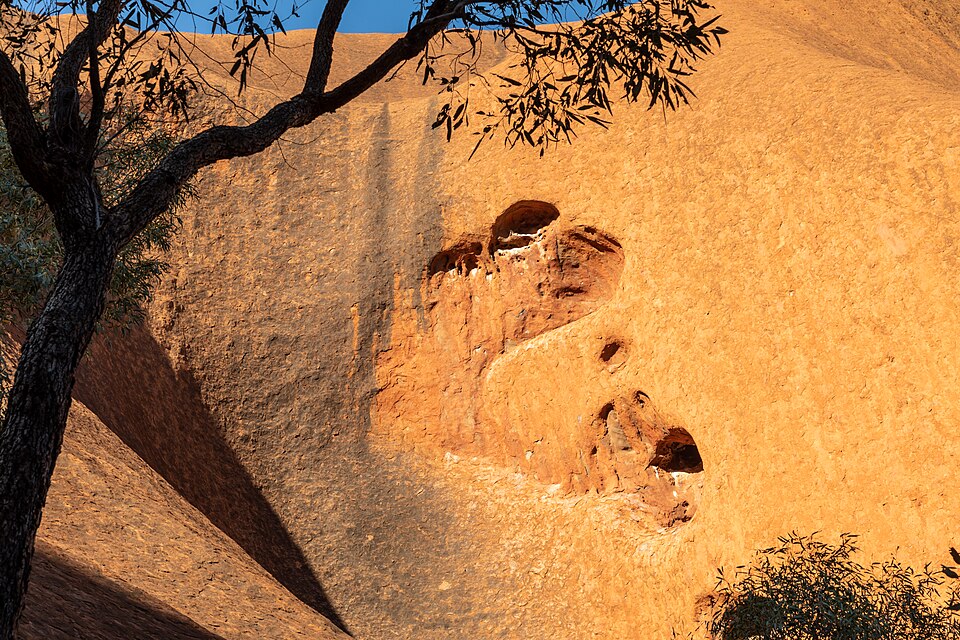
i
Dietmar Rabich, CC BY-SA 4.0, via Wikimedia Commons
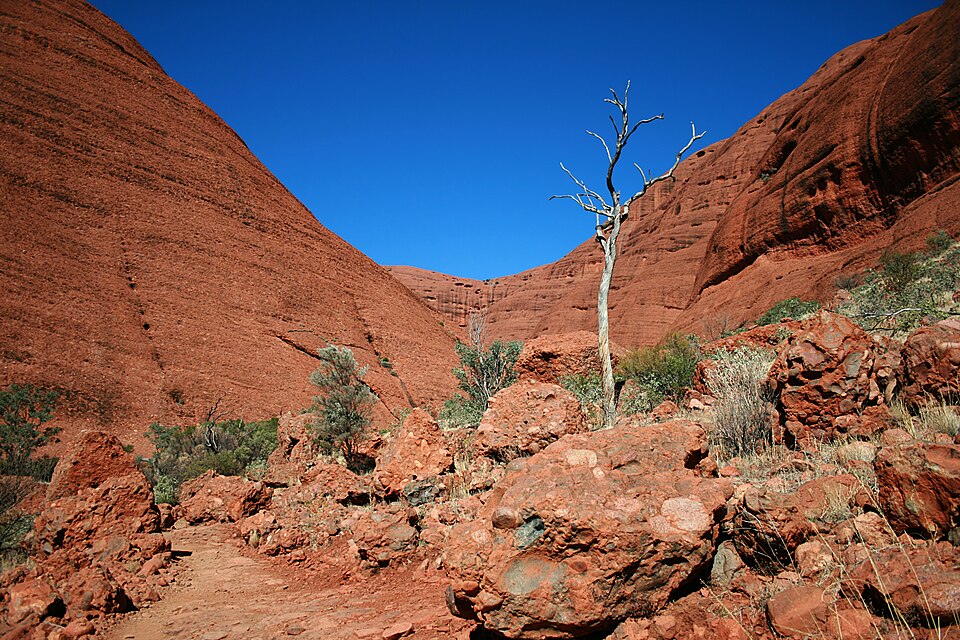
i
Toby Hudson, CC BY-SA 3.0, via Wikimedia Commons
i
Toby Hudson, CC BY-SA 3.0, via Wikimedia Commons
i
Kate Branch, CC BY-SA 4.0, via Wikimedia Commons
What Uluru is like
Uluṟu-Kata Tjuṯa National Park is a park in the Northern Territory of Australia, part of the so-called Red Centre of the continent. More on Wikivoyage
- Worth seeing
- Uluṟu (Ayers Rock). The sunrise viewing area Talinguru Nyakuntjaku (which means 'place to look from the sand dune') is on the Eastern side of Uluru. More on Wikivoyage
- Worth doing
- The Uluru base walk (9.8 km) will take 3–4 hours. Most people walk clockwise on the track but a few kilometres along this track the crowds thin out to just an occasional walker. More on Wikivoyage
- Getting in
- From the north, in Alice Springs take the Stuart Highway (A87) South for about 200 km to Erldunda Roadhouse. Turn right onto the Lasseter Highway and 245 km further on you arrive at Yulara). More on Wikivoyage
- Staying safe
- Unless you're well-equipped with an appropriate vehicle, supplies and maps, stay on the marked roads. Keep an eye on your fuel supply before you set off anywhere. More on Wikivoyage
From the Wikivoyage article on Uluṟu-Kata Tjuṯa National Park, written by travellers and licensed CC BY-SA 4.0; the full article has far more. The numbers above are measured; this is experience.
Around Uluru
Also in Australia
- Adelaide best Feb, Mar, Dec
- Alice Springs best Aug, Sep, Oct
- Brisbane best Jun, Aug, Sep
- Coober Pedy best Sep, Oct, Nov
- Darwin best May, Jun, Aug
- Gold Coast best Feb, Jun, Sep
- Great Barrier Reef best Aug, Sep, Oct
- Hobart best Feb, Oct, Nov
- Kangaroo Island best Feb, Sep, Oct
- Lord Howe Island best Feb, Sep, Dec
- Melbourne best Feb, Oct, Dec
- Mornington Peninsula best Jan, Feb, Dec
- Mungo National Park best Feb, Aug, Oct
- Perth best Mar, Oct, Nov
- Sunshine Coast best Sep, Oct, Nov
- Sydney best Feb, Sep, Oct
- Whitsunday Islands best Jun, Sep, Oct
Nearby
- Labuan Bajo Indonesia · 2,202 km
- Lombok Indonesia · 2,394 km
- Mount Rinjani Indonesia · 2,436 km
- Gili Islands Indonesia · 2,457 km
Kind of place
Uluru is in Australia, Oceania. Distances are great-circle, so a short one can still be a long way round.
Check your inbox. A confirmation is on its way: open the link in it, press Confirm, and you are subscribed.
That did not go through. Check the address, or try again in a minute.
Already sent. A confirmation went to that address in the last day: look for it, spam folder included. Its link works for three days.
You are not on the list until you confirm from your inbox. The list lives with our email provider, Resend; the privacy page says the rest.
Links marked Ad pay us a commission if you book through one, at no extra cost to you. That does not affect the scores on this page, which are computed from climate and holiday data before any link is built.