Best time to visit Melbourne
All twelve months scored on daily temperature, rainfall, humidity and holiday crowding.
Affiliate links: we may earn a commission if you book through one, at no extra cost to you. It changes nothing above — the scores are computed from climate and fare data before any link is built.
Free, on Telegram. One tap. We write
when a fare is genuinely below what that route normally costs, and
/stop ends it.
No fare history for this route yet, so this ranking is climate and crowds only — the price column will fill in as the scanner collects.
Month by month
| Month | Max °C | Rain days | Humidity | Sun h/day | Verdict | Why |
|---|---|---|---|---|---|---|
| Jan | 26° | 5d | 65% | 11.4h | goodbusy | peak: Summer season attracts many tourists for festivals and outdoor… |
| Feb | 25° | 4d | 65% | 11.6h | sweet spot | 25C max, 4 rainy days |
| Mar | 23° | 5d | 69% | 9.9h | goodbusy | shoulder season |
| Apr | 19° | 5d | 72% | 8.8h | goodbusy | shoulder season |
| May | 15° | 6d | 77% | 7.6h | okbusy | shoulder season |
| Jun | 13° | 8d | 82% | 6.9h | okbusy | peak: Winter months feature ski trips and winter festivals, drawing… |
| Jul | 12° | 7d | 80% | 7.3h | okbusy | peak: Winter months feature ski trips and winter festivals, drawing… |
| Aug | 13° | 8d | 78% | 8.2h | okbusy | peak: Winter months feature ski trips and winter festivals, drawing… |
| Sep | 16° | 7d | 72% | 9.5h | good | 16C max, 7 rainy days |
| Oct | 18° | 8d | 71% | 9.9h | goodbusy | shoulder season |
| Nov | 21° | 9d | 69% | 11.0h | goodbusy | shoulder season |
| Dec | 23° | 6d | 66% | 11.8h | goodbusy | peak: Summer season attracts many tourists for festivals and outdoor… |
A busy month is a crowded one, not a bad one — usually it is crowded because the weather is good. It is flagged rather than scored down, and crowds alone never make a month “avoid”: that is reserved for weather worth skipping.
Getting there
How far Melbourne is, and what it costs, depends on where you set off from — the months above do not.
- from Sydney
- from Auckland
- from Perth
- from Jakarta
- from Singapore
- from Manila
- from Kuala Lumpur
- from Ho Chi Minh City
The year in Melbourne
Climate data is unavailable, but be aware of Melbourne's variable weather patterns. It's best to check updated local forecasts closer to your travel dates.
| Busiest |
mid Dec to late Jan — Summer season attracts many tourists for festivals and outdoor activities.
early Jun to late Aug — Winter months feature ski trips and winter festivals, drawing visitors.
|
|---|---|
| Quieter, still good |
early Mar to late May — Mild weather and blooming flora make it a pleasant time to visit.
early Sep to late Nov — Spring offers festivals and pleasant weather, appealing to travelers.
|
| Watch out for | extreme heat; flooding |
Written by a language model from the climate figures above. The month-by-month table is measured — ten years of ERA5 readings and published holiday calendars — and where the two disagree, the table is the one to believe. The busiest and quieter periods here also count toward the crowd score.
What Melbourne is like
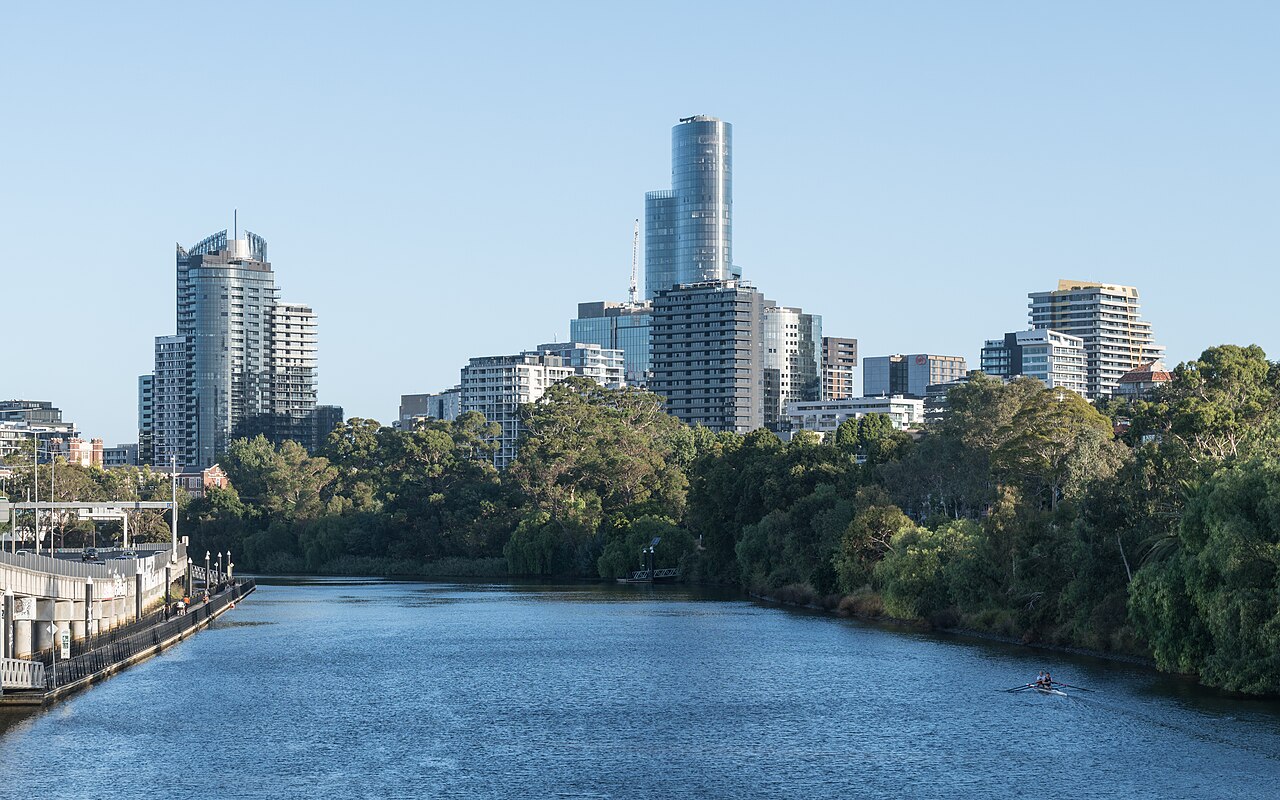
Melbourne (Naarm in the Woiworrung language) is Australia's cultural capital and second biggest city, with Victorian-era architecture, extensive shopping, museums, galleries, theatres, and large parks and gardens. Many of its 5.2 million residents are both multicultural and sports-mad. The capital of the south-eastern state of Victoria, and located at the head of Port Phillip Bay, Melbourne is a magnet for migrants from all over the world, and consistently ranks as one of the world's most livable cities.
- Worth seeing
- Melbourne is a great city for arts, culture, dining, and events. Visitors frequently comment on the "good vibe" of the city, which can only be understood by experiencing it for yourself. There are a wide and varied assortment of attractions and sights, with something for every traveller. Most are in the CBD, in close reach of public transport. Melbourne is also a good base for experiencing the other attractions of Victoria, most of which can be reached on day trips. Melbourne is Australia's best city for street art – refer to street art in Melbourne for more information. Melbourne's museums are generally well-regarded and worth a visit if you have time to spare.
- Worth doing
- Visit the Queen Victoria Market – it stretches over two blocks and holds the title of the largest open-air market in the Southern Hemisphere. Walk along Swanston Street to find a wide variety of eateries of all types, from Vietnamese to Italian. Kick back at one of Melbourne's fantastic cafes in the CBD (Degraves St, The Causeway, and other laneways are fantastic for this), South Yarra (Chapel Street) or Fitzroy (Brunswick Street, Smith Street). For upmarket restaurants, visit Flinders Lane and select from more expensive, sit-down food and drink. See interesting films at the Art Deco-styled Astor Theatre in St Kilda. There are several moonlight cinema programs in summer.
- Getting in
- The city is primarily serviced by Melbourne Airport at Tullamarine which has international flights and a comprehensive domestic schedule. Avalon Airport is more distant, partway between Melbourne and Geelong, and hosts only a couple of domestic routes (Jetstar to Sydney & Gold Coast). Finally, five regional destinations can be reached on light aircraft from Essendon Airport (MEB IATA): King Island and Flinders Island in Tasmania, and Dubbo, Orange and Wollongong in NSW. For general aviation, the aforementioned Essendon Airport as well as Moorabbin Airport (MBW IATA) in the southeastern suburbs of the urban area, are the airports of choice.
- Getting around
- Melbourne's CBD is laid out in an orderly grid system, similar to Manhattan, meaning that navigating the CBD is easy. Melbourne has a comprehensive public transport system consisting of trams, trains, and buses. Trams criss-cross the city, trains extend to the outer suburbs, and buses cover the remaining destinations. Transport Victoria coordinates all train, tram and bus services within the state. The website and app provide a journey planner, timetables, maps and disruption information. Apple Maps and Google Maps also provide a journey planner and disruption information. Services generally operate between 5AM and midnight Monday–Saturday and after 8AM Sunday.
- Staying safe
- The Australia-wide emergency number is 000, with the ambulance service, fire department and police being available through this number. It is important to take care around tram lines. Trams are heavy and it can take over 100 metres for a tram to safely stop. Even if a tram has passed, look carefully both ways, as trams will often run nose-to-tail on busy corridors like Swanston Street. Many tram stops further from the CBD often require walking on to the road. There is often traffic around trams, so be careful crossing if running to catch a tram. Driving in Melbourne can be nerve-wracking due to the presence of trams.
From the Wikivoyage article on Melbourne, written by travellers and licensed CC BY-SA 4.0; the full article has far more. The numbers above are measured; this is experience.
Before you go
| Cost of living | expensive — prices run about 90% of the United States' (World Bank, 2025) |
|---|---|
| Currency | Australian dollar |
| Languages | Australian English, Auslan, English |
| Plugs | Type I, 230 V |
| Driving | On the left |
| Emergency | 000, 112, 106 |
| Calling code | +61 |
| Travel advice | No advice against travel — UK Foreign Office, updated 2026-03-19 |
Health. Before you travel check that: your destination can provide the healthcare you may need you have appropriate travel insurance for local treatment or unexpected medical evacuation This is particularly important if you have a health condition or are pregnant. Emergency medical number Dial 000 and ask for an ambulance. Contact your insurance or medical assistance company quickly if you’re referred to … More.
Facts from Wikidata (CC0), the UK Foreign Office (Open Government Licence) and the World Bank, refreshed 2026-09-23. The advisory is written for British travellers; entry rules depend on your passport.
The rest of the trip
Some links above are affiliate links: if you book through one, we may earn a commission at no extra cost to you. It does not affect the scores on this page, which are computed from climate and fare data before any link is built.