

Best time to visit Rio de Janeiro
Brazil · Latin America
All twelve months scored on daily temperature, rainfall, humidity and holiday crowding.
The year in Rio de Janeiro
Tap a month for its page
- JanJRio de Janeiro in January: good, busy
- FebFRio de Janeiro in February: good, busy
- MarMRio de Janeiro in March: sweet spot
- AprARio de Janeiro in April: sweet spot
- MayMRio de Janeiro in May: sweet spot
- JunJRio de Janeiro in June: good
- JulJRio de Janeiro in July: sweet spot
- AugARio de Janeiro in August: sweet spot
- SepSRio de Janeiro in September: sweet spot
- OctORio de Janeiro in October: sweet spot
- NovNRio de Janeiro in November: good
- DecDRio de Janeiro in December: good
- Sweet spot
- Good
- OK
- Avoid
- Busy
Dry season: Mar, May–Jul, Sep, 6 or fewer rainy days a month.
Plan this trip
Each site opens on its own search: choose your dates there. A few open on their home page, where you type the place too.
Links marked Ad pay us a commission if you book, at no extra cost to you; most pay nothing, and what a site pays never decides whether it is listed or where. How we rank
Flights from
Flights
Your city is a guess from your time zone. Choose your city
Where are you flying from? Choose your city for its flights and fares.
Book with the airline
Where to stay
Book direct
Luxury
Things to do
Car hire
Travel insurance
Check whether your bank card or home insurance already covers this trip.
If the trip needs a visa, the travel agent or visa centre usually sells the cover it asks for.
Mobile data (eSIM)
Your own plan's EU roaming may already cover this.
Renting a pocket Wi-Fi is the other common way to stay connected.
These are sites people in book with. Each opens in a new tab, on the site's own pages.
Things to do in Rio de Janeiro
- Recreio dos Bandeirantes beach Neighborhood in Rio de Janeiro
- Sugar Loaf Mountain One of the defining landmarks of the city.
- Ipanema Beach The main beach for the middle-class, and specifically the Posto 9 section…
- Christ the Redeemer Statue (Corcovado peak) The 710 m granite peak of Corcovado…
- Metropolitan Cathedral of Saint Sebastian A rather bizarre, modern cathedral shaped like a volcano…
- Selarón Steps A stairway covered by colorful tiles and the ever-evolving art work of Chilean artist…
- Paquetá Though not exactly outside of Rio…
Tours and tickets in Rio de Janeiro
Each site opens on its own search: choose your dates there. A few open on their home page, where you type the place too. Links marked Ad pay us a commission if you book, at no extra cost to you; most pay nothing, and what a site pays never decides whether it is listed or where. How we rank
Sights and their lines from Wikivoyage (Rio de Janeiro, Rio de Janeiro/Centro, Rio de Janeiro/Zona Sul), licensed CC BY-SA 4.0, and Wikidata; in order of how often each one's Wikipedia article was read on phones in the last 12 months.
Month by month
No fare history for this route yet, so this ranking is climate and crowds only — the price column will fill in as the scanner collects.
| Month | Max °C | Rain days | Humidity | Sun h/day | Verdict | Why |
|---|---|---|---|---|---|---|
| Jan | 30° | 8d | 80% | 10.5h | goodbusy | holidays: GB: New Year's Day |
| Feb | 30° | 7d | 81% | 10.2h | goodbusy | busier than usual |
| Mar | 29° | 6d | 82% | 10.6h | sweet spot | 29C max, 6 rainy days |
| Apr | 27° | 6d | 82% | 10.1h | sweet spot | 27C max, 6 rainy days |
| May | 26° | 4d | 81% | 9.3h | sweet spot | 26C max, 4 rainy days |
| Jun | 25° | 4d | 81% | 9.1h | good | 25C max, 4 rainy days |
| Jul | 24° | 4d | 79% | 9.2h | sweet spot | 24C max, 4 rainy days |
| Aug | 25° | 6d | 79% | 8.9h | sweet spot | 25C max, 6 rainy days |
| Sep | 26° | 5d | 80% | 9.6h | sweet spot | 26C max, 5 rainy days |
| Oct | 26° | 7d | 82% | 9.2h | sweet spot | 26C max, 7 rainy days |
| Nov | 26° | 9d | 81% | 10.0h | good | 26C max, 9 rainy days |
| Dec | 28° | 9d | 82% | 10.5h | good | 28C max, 9 rainy days |
Rain days are the days with at least 1 mm of rain, as a weather station counts them.
Weather read at Copacabana, 19 km from the airport (GIG): ten years of ERA5 and ERA5-Land reanalysis, through Open-Meteo's open data.
A busy month is a crowded one, not a bad one — usually it is crowded because the weather is good. It is flagged rather than scored down, and crowds alone never make a month “avoid”: that is reserved for weather worth skipping.
How busy it gets
Then and now
No month in Rio de Janeiro is clearly warmer than in 1981–1990: the differences are inside the ordinary spread between one year and the next.
| Jan | Feb | Mar | Apr | May | Jun | Jul | Aug | Sep | Oct | Nov | Dec | |
|---|---|---|---|---|---|---|---|---|---|---|---|---|
| 1981–90 | 30.2° | 30.5° | 28.9° | 27.5° | 25.8° | 24.3° | 23.8° | 24.8° | 25.1° | 26.3° | 28.2° | 28.3° |
| 2017–26 | 29.9° | 29.7° | 28.8° | 26.9° | 25.5° | 24.9° | 24.3° | 24.5° | 25.8° | 26.2° | 26.4° | 28.2° |
| Change | -0.3° | -0.8° | -0.1° | -0.5° | -0.2° | +0.6° | +0.5° | -0.3° | +0.7° | -0.1° | -1.8° | -0.0° |
The average daily high, month by month, for the nearest ERA5 grid cell. Bold is a clear change; grey is within the ordinary spread between years. Every destination, ranked.
Getting there
How far Rio de Janeiro is, and what it costs, depends on where you set off from — the months above do not.
- from Sao Paulo
- from Buenos Aires
- from Santiago
- from Lima
- from Bogota
- from Lagos
- from Cape Town
- from Miami
Open in Rome2rio for every way from to Rio de Janeiro, flying or not.
Before you go
Type C plugs at 127 / 220 V. Drives on the right. The currency is the Brazilian real. UK Foreign Office: avoid all but essential travel to parts. Global Affairs Canada: Exercise a high degree of caution (with regional advisories). US State Department: Level 2: Exercise Increased Caution. Everything for Brazil: cost of living, languages, emergency numbers and health.
Being there
On arrival
- Paying — Most businesses take cards, and in big cities cash is used less and less. Locals pay by Pix, which needs a Brazilian bank account or CPF.
- UPI, for visitors from India — Not accepted for paying here; bring a card that works abroad.
- Tipping — A 10% service charge is usually on the restaurant bill, so nothing more is needed; taxi drivers do not expect a tip, though people may round up.
Getting around Rio de Janeiro
Tap a Visa, Mastercard or Elo card or a phone at metro gates: R$7.90 a ride (line 1 runs through Copacabana). Buses, the BRT and the VLT tram cost R$5, paid with a Jaé card (R$5 deposit, from machines at BRT and VLT stations) or a QR code in the Jaé app; buses take no cash, and on the VLT pay at a validator or risk a R$170 fine. The VLT stops at Santos Dumont airport (SDU); from Galeão (GIG), the BRT meets the metro at Vicente de Carvalho.
- Apps — Rides: 99, inDrive, Uber. Maps: Google Maps, Apple Maps. Messages: WhatsApp.
Rio de Janeiro possesses an extensive and complex, highly multi-modal public transportation system, adapted to the city's unique topography… More on Wikivoyage
From the Wikivoyage article on Rio de Janeiro, written by travellers and licensed CC BY-SA 4.0.
Ferries from Rio de Janeiro
- Praça XV - Charitas · about 20 min
- Praça XV - Praça Arariboia · about 20 min
- Praça XV - Cocotá · about 55 min
- Praça XV - Paquetá · about 1h 00m
Crossings within 60 km, as mapped by OpenStreetMap contributors (ODbL). Times are typical where the map records them.
Help
- Emergency — police 190 or 911 · ambulance 192 · fire 193.
TravelCharika is not an emergency service: we cannot call for help or send anyone. Numbers can change; if one fails, ask someone local or your hotel.
- Hospitals near Rio de Janeiroa search on Google Maps
- Pharmacies near Rio de Janeiroa search on Google Maps
Your embassy — : how to reach your embassy or consulate abroad. A guess from your city, : a city is not a passport.
Put together by hand from the sources listed, checked 7 October 2026. Apps, cards and rules change, so check before you rely on one.
Sources (28)
- gov.uk/foreign-travel-advice/brazil/getting-help
- travel.gc.ca/destinations/brazil
- uber.com/global/en/cities/sao-paulo
- indrive.com/pt-br/city-rides
- en.wikivoyage.org/wiki/Brazil
- en.wikivoyage.org/wiki/S%C3%A3o_Paulo
- metro.sp.gov.br/sua-viagem/turismetro
- metrocptm.com.br/pagamento-por-aproximacao-chega-a-todas-as-catracas-do-metro-de-sp
- onibusetransporte.com/2026/09/16/metro-de-sao-paulo-pagamento-aproximacao-credito-debito-autopass
- altarendablog.com.br/2026/09/30/visa-libera-pagamento-por-aproximacao-em-todas-as-catracas-do-metro-sp-nas-linhas-1-2-3-e-15
- dgabc.com.br/Noticia/4346348/metro-amplia-pagamento-por-aproximacao-para-catracas-em-quatro-linhas
- metrocptm.com.br/guia-do-metro-de-sao-paulo-em-2026-linhas-operacao-e-como-usar-o-sistema
- infobip.com/blog/whatsapp-statistics
- soax.com/research/most-popular-messaging-apps
- developers.google.com/maps/coverage
- apple.com/ios/feature-availability
- metrorio.com.br/como-pagar/meios-e-tarifas
- metrorio.com.br/Como-Pagar/pagamento-por-aproximacao
- jae.com.br/faq/duvidas-gerais
- jae.com.br/faq/cartao-jae-4
- jae.com.br/faq/app-jae-2
- jae.com.br/faq/maquina-de-auto-atendimento-jae-atm
- trilhos.motiva.com.br/vltrio/guia-de-uso
- trilhos.motiva.com.br/vltrio/linha-1---azul/santos-dumont
- riogaleao.com/passageiros/como-chegar-e-sair/brt
- diariodotransporte.com.br/2026/06/10/rio-de-janeiro-oficializa-fim-do-recebimento-de-dinheiro-em-onibus-da-capital-a-partir-de-28-de-junho
- pib.gov.in/PressReleasePage.aspx?PRID=2286608
- rbidocs.rbi.org.in/rdocs/AnnualReport/PDFs/09PAYMENT290526C6588B796E664822A2BD0DEB6452CAD4.PDF
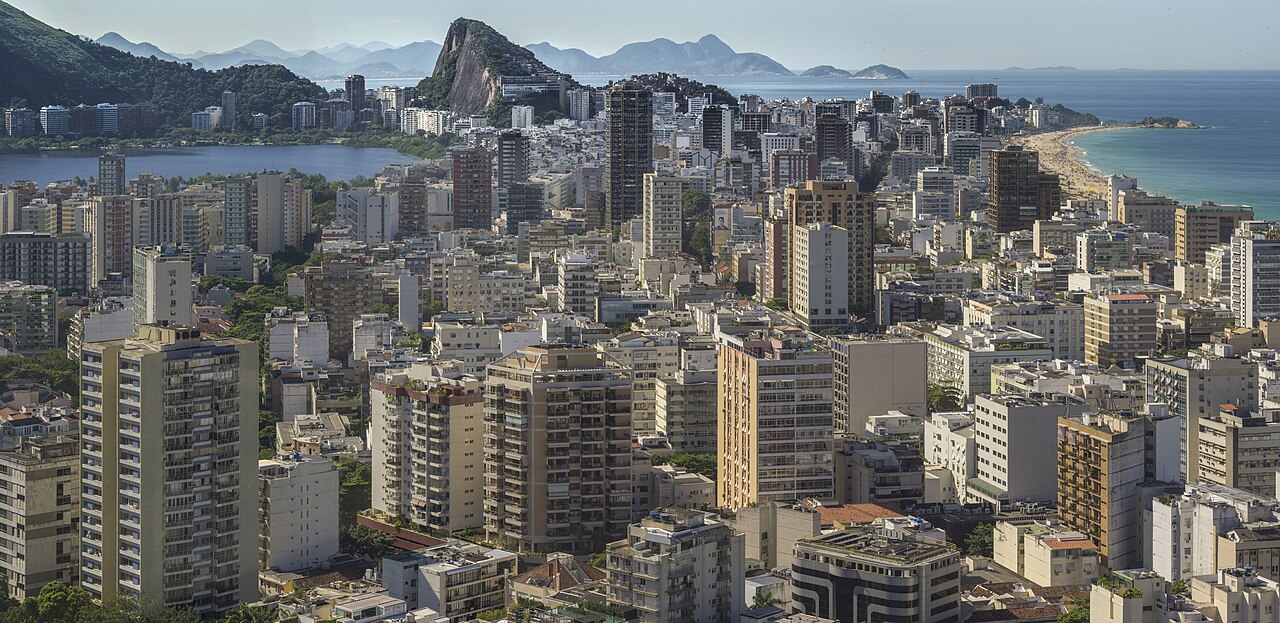
Rio de Janeiro in pictures
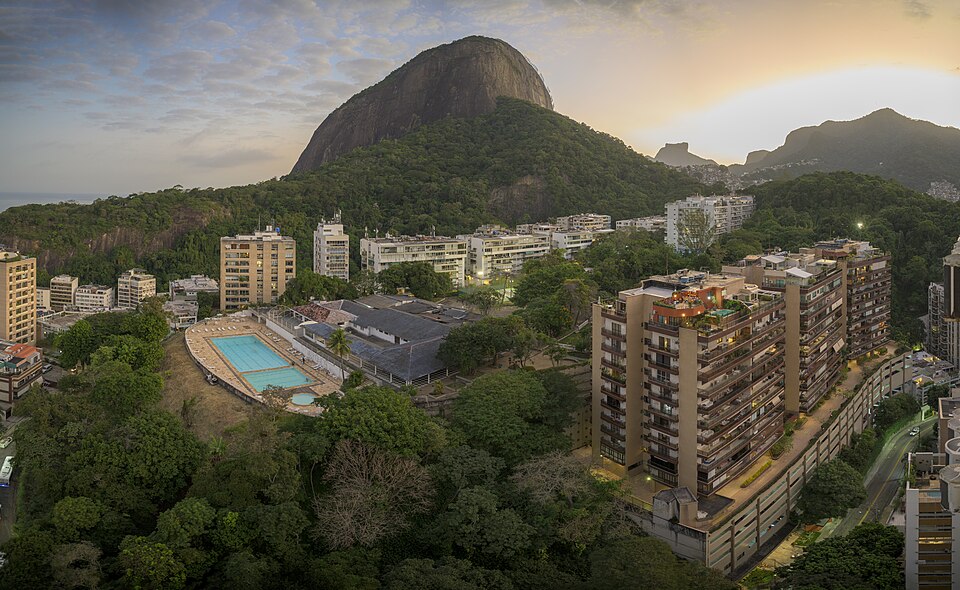
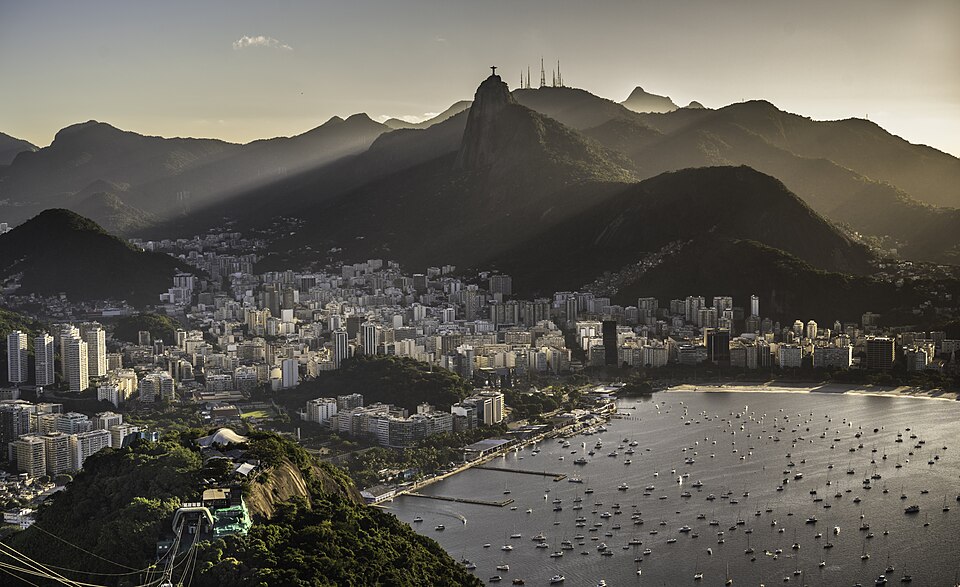
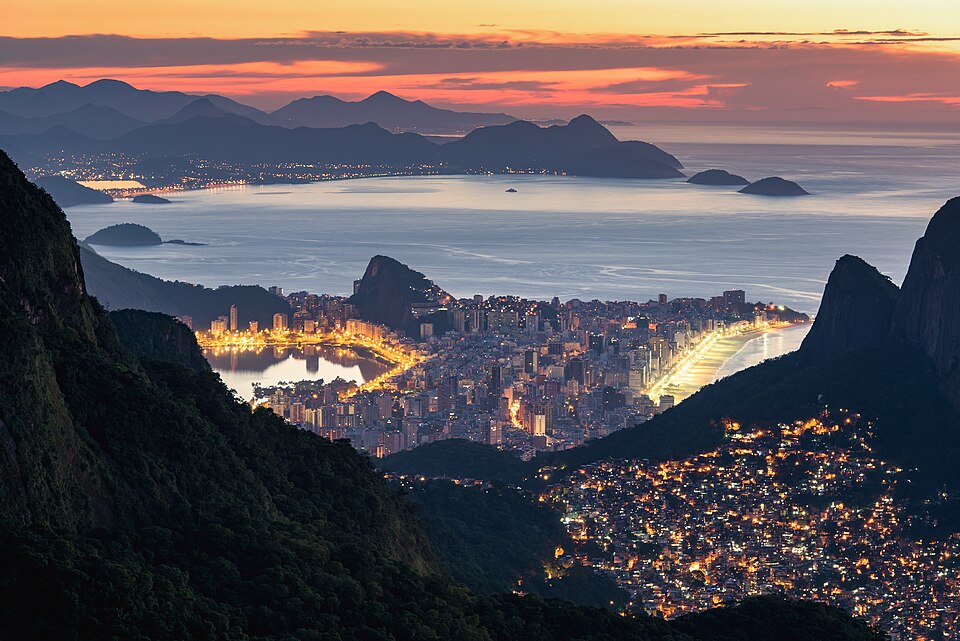
i
Donatas Dabravolskas, CC BY-SA 4.0, via Wikimedia Commons

i
Claudney Neves, CC BY-SA 3.0, via Wikimedia Commons
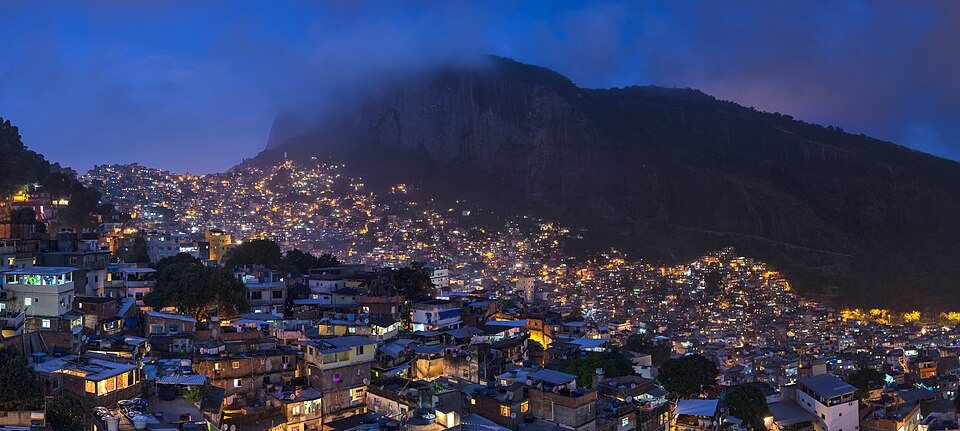
i
Chensiyuan, CC BY-SA 3.0, via Wikimedia Commons
What Rio de Janeiro is like
Rio de Janeiro is the second largest city in Brazil, on the South Atlantic coast. Rio is famous for its breathtaking landscape, its laid-back beach culture and its annual carnival. The "Carioca Landscapes between the Mountain and the Sea" has been inscribed on the UNESCO World Heritage list. More on Wikivoyage
- Worth seeing
- Corcovado, the 710 m (2,330 ft) granite peak located in the Tijuca Forest in central Rio is known worldwide for the Cristo Redentor statue. The funicular train up to Cristo Redentor is definitely worth the view. More on Wikivoyage
- Worth doing
- Still the greatest reason for visiting Rio seems to be the Carnaval. More on Wikivoyage
- Getting in
- Rio is one of the country's major transportation hubs, second only to São Paulo. Metropolitan area airport code for the two airports of the city is unsurprisingly RIO IATA. More on Wikivoyage
- Staying safe
- Rio de Janeiro's reputation as a dangerous city was cemented internationally by the critically acclaimed movie Cidade de Deus — a reputation that's not entirely unwarranted. More on Wikivoyage
- Staying healthy
- Rio is vulnerable to epidemics of dengue fever, particularly during the late summer months of February and March. More on Wikivoyage
From the Wikivoyage article on Rio de Janeiro, written by travellers and licensed CC BY-SA 4.0; the full article has far more. The numbers above are measured; this is experience.
Around Rio de Janeiro
Also in Brazil
Nearby
- Buenos Aires Argentina · 1,963 km
- Valle Nevado Chile · 2,883 km
- Santiago Chile · 2,932 km
- Machu Picchu Peru · 3,281 km
Kind of place
Rio de Janeiro is in Brazil, Latin America. Distances are great-circle, so a short one can still be a long way round.
Check your inbox. A confirmation is on its way: open the link in it, press Confirm, and you are subscribed.
That did not go through. Check the address, or try again in a minute.
Already sent. A confirmation went to that address in the last day: look for it, spam folder included. Its link works for three days.
You are not on the list until you confirm from your inbox. The list lives with our email provider, Resend; the privacy page says the rest.
Links marked Ad pay us a commission if you book through one, at no extra cost to you. That does not affect the scores on this page, which are computed from climate and fare data before any link is built.