

i
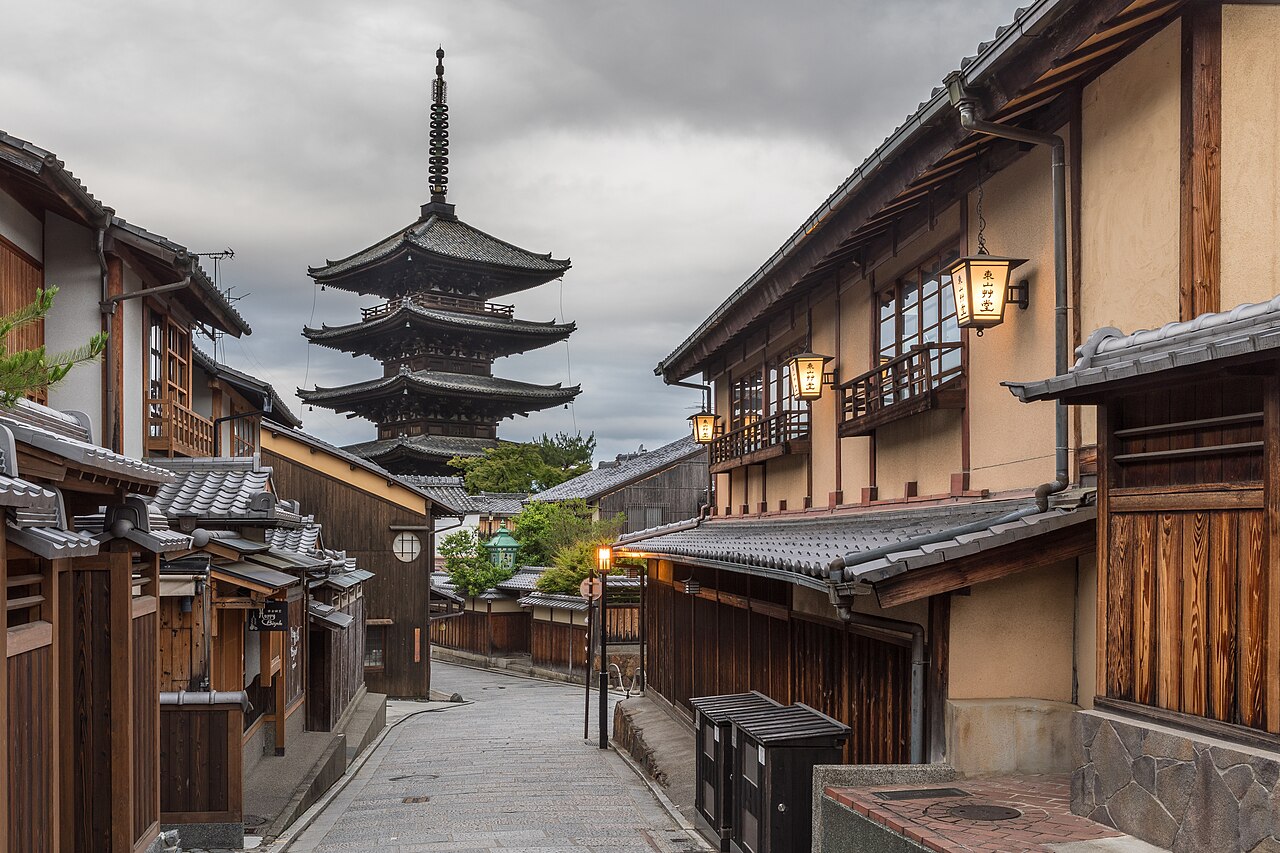
Photo by Basile Morin, CC BY-SA 4.0, via Wikimedia Commons.
Best time to visit Kyoto
Japan · East Asia
All twelve months scored on daily temperature, rainfall, humidity and holiday crowding.
The year in Kyoto
Tap a month for its page
- JanJKyoto in January: ok
- FebFKyoto in February: ok
- MarMKyoto in March: ok, busy
- AprAKyoto in April: good, busy
- MayMKyoto in May: sweet spot
- JunJKyoto in June: sweet spot
- JulJKyoto in July: ok
- AugAKyoto in August: ok
- SepSKyoto in September: sweet spot
- OctOKyoto in October: ok
- NovNKyoto in November: good
- DecDKyoto in December: ok
- Sweet spot
- Good
- OK
- Avoid
- Busy
Plan this trip
Each site opens on its own search: choose your dates there. A few open on their home page, where you type the place too.
Links marked Ad pay us a commission if you book, at no extra cost to you; most pay nothing, and what a site pays never decides whether it is listed or where. How we rank
Flights from
Flights
Your city is a guess from your time zone. Choose your city
Where are you flying from? Choose your city for its flights and fares.
Book with the airline
Where to stay
Book direct
Luxury
Things to do
Car hire
Rent direct
Travel insurance
Check whether your bank card or home insurance already covers this trip.
If the trip needs a visa, the travel agent or visa centre usually sells the cover it asks for.
Mobile data (eSIM)
Your own plan's EU roaming may already cover this.
Renting a pocket Wi-Fi is the other common way to stay connected.
These are sites people in book with. Each opens in a new tab, on the site's own pages.
Things to do in Kyoto
- Fushimi Inari Taisha Another of Kyoto's jewels, located just south of Higashiyama in the Fushimi area.
- Kiyomizu Temple This temple complex, with its spectacular location overlooking the city…
- Kinkaku-ji Temple The Temple of the Golden Pavilion, formally known as Rokuonji (鹿苑寺)…
- Kyoto Imperial Palace The palace is a reconstruction (dating from 1855)…
- Nijō Castle Certainly one of the highlights of Kyoto…
- Fushimi Momoyama Castle This castle was once a favorite of Toyotomi Hideyoshi.
- Tenryū-ji One of the city's UNESCO World Heritage Sites and the main temple of the Rinzai sect of…
Tours and tickets in Kyoto
Each site opens on its own search: choose your dates there. A few open on their home page, where you type the place too. Links marked Ad pay us a commission if you book, at no extra cost to you; most pay nothing, and what a site pays never decides whether it is listed or where. How we rank
Sights and their lines from Wikivoyage (Kyoto/Arashiyama, Kyoto/Central, Kyoto/Higashiyama, Kyoto/North, Kyoto/South), licensed CC BY-SA 4.0; in order of how often each one's Wikipedia article was read on phones in the last 12 months.
Month by month
No fare history for this route yet, so this ranking is climate and crowds only — the price column will fill in as the scanner collects.
| Month | Max °C | Rain days | Humidity | Sun h/day | Verdict | Why |
|---|---|---|---|---|---|---|
| Jan | 8° | 4d | 75% | 7.3h | ok | 8C max, 4 rainy days |
| Feb | 9° | 6d | 74% | 7.3h | ok | 9C max, 6 rainy days |
| Mar | 14° | 10d | 73% | 8.1h | okbusy | busier than usual |
| Apr | 19° | 10d | 72% | 8.4h | goodbusy | busier than usual |
| May | 24° | 10d | 72% | 9.1h | sweet spot | 24C max, 10 rainy days |
| Jun | 27° | 10d | 77% | 8.6h | sweet spot | 27C max, 10 rainy days |
| Jul | 31° | 10d | 79% | 9.7h | ok | 31C max, 10 rainy days |
| Aug | 33° | 7d | 75% | 10.4h | ok | 33C max, 7 rainy days |
| Sep | 28° | 10d | 79% | 8.5h | sweet spot | 28C max, 10 rainy days |
| Oct | 22° | 11d | 78% | 7.6h | ok | 22C max, 11 rainy days |
| Nov | 16° | 5d | 78% | 7.9h | good | 16C max, 5 rainy days |
| Dec | 11° | 6d | 77% | 7.3h | ok | 11C max, 6 rainy days |
Rain days are the days with at least 1 mm of rain, as a weather station counts them.
Weather read at Gion: ten years of ERA5 and ERA5-Land reanalysis, through Open-Meteo's open data.
A busy month is a crowded one, not a bad one — usually it is crowded because the weather is good. It is flagged rather than scored down, and crowds alone never make a month “avoid”: that is reserved for weather worth skipping.
How busy it gets
Then and now
Kyoto's March days now average 13.8°C, 2.6°C warmer than in 1981–1990. 12 of 12 months are clearly warmer.
| Jan | Feb | Mar | Apr | May | Jun | Jul | Aug | Sep | Oct | Nov | Dec | |
|---|---|---|---|---|---|---|---|---|---|---|---|---|
| 1981–90 | 6.8° | 7.2° | 11.2° | 17.6° | 21.9° | 25.4° | 28.6° | 30.5° | 26.3° | 20.1° | 14.8° | 9.6° |
| 2017–26 | 8.2° | 9.2° | 13.8° | 18.8° | 23.5° | 26.9° | 31.1° | 32.7° | 28.4° | 22.0° | 16.5° | 10.5° |
| Change | +1.4° | +2.0° | +2.6° | +1.2° | +1.6° | +1.5° | +2.6° | +2.2° | +2.1° | +1.9° | +1.7° | +0.9° |
The average daily high, month by month, for the nearest ERA5 grid cell. Bold is a clear change; grey is within the ordinary spread between years. Every destination, ranked.
Getting there
Fly into Osaka (KIX), then drive. The flights under Where to book are to Osaka.
The drive from each airport is the road's, from openrouteservice.org by HeiGIT: typical, not a schedule.
How far Kyoto is, and what it costs, depends on where you set off from — the months above do not.
- from Tokyo
- from Seoul
- from Taipei
- from Hong Kong
- from Manila
- from Ho Chi Minh City
- from Bangkok
- from Kolkata
Open in Rome2rio for every way from to Kyoto, flying or not.
Before you go
Type A and B plugs at 100 V. Drives on the left. The currency is the Yen. No UK Foreign Office advice against travel. Global Affairs Canada: Exercise normal security precautions. US State Department: Level 1: Exercise Normal Precautions. Everything for Japan: cost of living, languages, emergency numbers and health.
Being there
On arrival
- Paying — Cards are widely taken in cities, but carry cash for small restaurants, inns and rural areas. Suica and PASMO also pay in many shops, and PayPay QR codes are common.
- UPI, for visitors from India — Not accepted for paying here; bring a card that works abroad.
- Tipping — Not done in restaurants or taxis; some hotels and restaurants add a 10% service charge.
Getting around Kyoto
Tap an IC card such as ICOCA, Suica or PASMO on city buses and at subway gates; buses also take cash but no bank cards, and the subway takes no credit cards. A bus ride in the flat-fare zone costs 230 yen, paid as you get off at the front; the subway costs 220 to 360 yen; the Subway & Bus 1-Day Pass, 1,100 yen from subway stations and on buses, lasts for the day you first use it. From Kansai Airport, JR's HARUKA limited express runs direct to Kyoto: its discounted one-way ticket for visitors (2,200 yen) is not sold in Japan, so buy it online or from an agent abroad and collect it with your passport.
- Apps — Rides: GO, DiDi, S.RIDE, Uber. Maps: Google Maps, Apple Maps. Messages: LINE. Ride apps here hail ordinary licensed taxis; private-car rideshare is limited to small trials.
The sheer size of the city of Kyoto, and the distribution of tourist attractions around the periphery of the city, make the city's public transport system invaluable. More on Wikivoyage
From the Wikivoyage article on Kyoto, written by travellers and licensed CC BY-SA 4.0.
Help
- Emergency — police 110 · ambulance and fire 119.
TravelCharika is not an emergency service: we cannot call for help or send anyone. Numbers can change; if one fails, ask someone local or your hotel.
Your embassy — : how to reach your embassy or consulate abroad. A guess from your city, : a city is not a passport.
Put together by hand from the sources listed, checked 7 October 2026. Apps, cards and rules change, so check before you rely on one.
Sources (21)
- gov.uk/foreign-travel-advice/japan/getting-help
- japan.travel/en/plan/getting-around/taxis
- japan.travel/en/plan/cashless-payments-in-japan
- japan.travel/en/plan/credit-cards
- japan.travel/en/plan/tipping-in-japan
- japan.travel/en/guide/how-to-travel-by-train-and-bus-in-japan
- japan-guide.com/e/e2359_credit_card_tap.html
- visa.co.jp/pay-with-visa/featured-technologies/contactless/merchants-transit.html
- apps.apple.com/us/app/go-taxi-app-for-japan-visit/id1254341709
- uber.com/global/en/cities/tokyo
- developers.google.com/maps/coverage
- apple.com/ios/feature-availability
- en.wikivoyage.org/wiki/Japan
- www2.city.kyoto.lg.jp/kotsu/webguide/en/bus/howtoride_bus.html
- www2.city.kyoto.lg.jp/kotsu/webguide/en/ticket/ic_card.html
- www2.city.kyoto.lg.jp/kotsu/webguide/en/ticket/regular_1day_card_comm.html
- city.kyoto.lg.jp/kotsu/page/0000240757.html
- city.kyoto.lg.jp/kotsu/page/0000334479.html
- westjr.co.jp/travel-information/en/tickets-passes/oneway/haruka
- pib.gov.in/PressReleasePage.aspx?PRID=2286608
- nipl.com/uploads/NPCI_International_signs_Mo_U_with_NTT_DATA_Japan_to_enable_UPI_acceptance_at_merchant_locations_in_Japan_14_Oct_002_a292d8d769.pdf
Kyoto in pictures
i
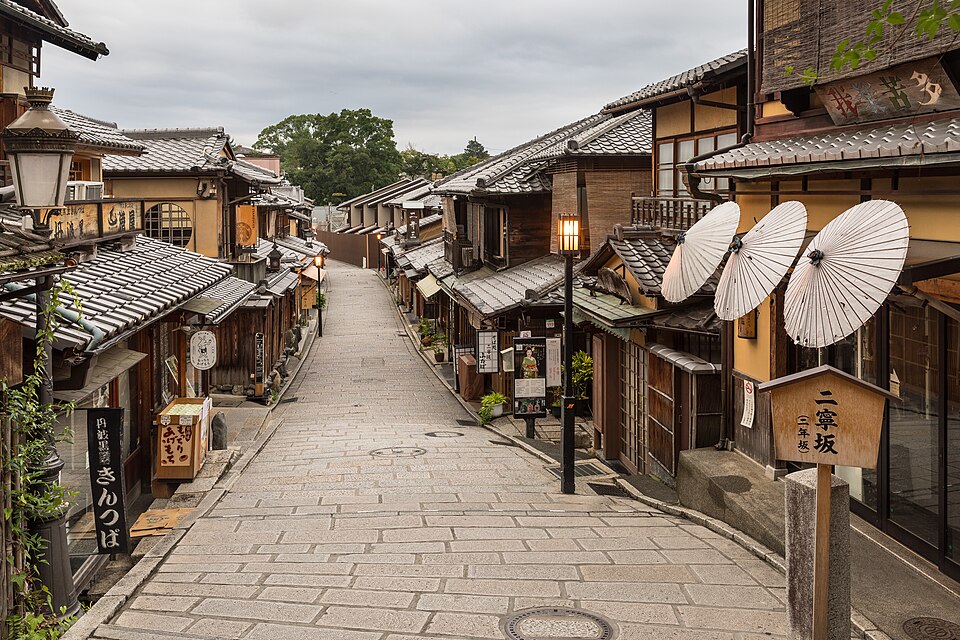
Basile Morin, CC BY-SA 4.0, via Wikimedia Commons
i
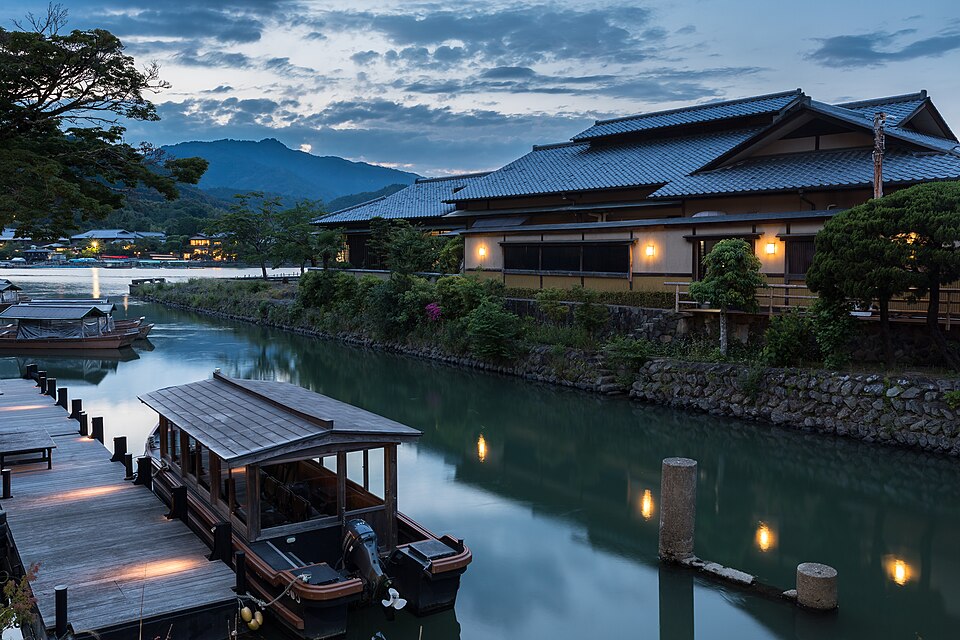
Basile Morin, CC BY-SA 4.0, via Wikimedia Commons
i
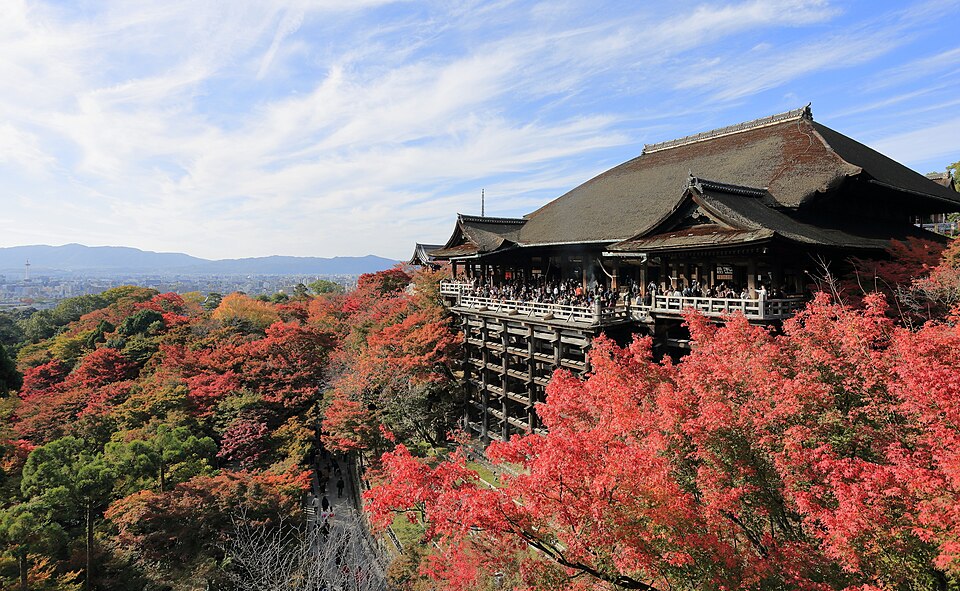
Martin Falbisoner, CC BY-SA 4.0, via Wikimedia Commons
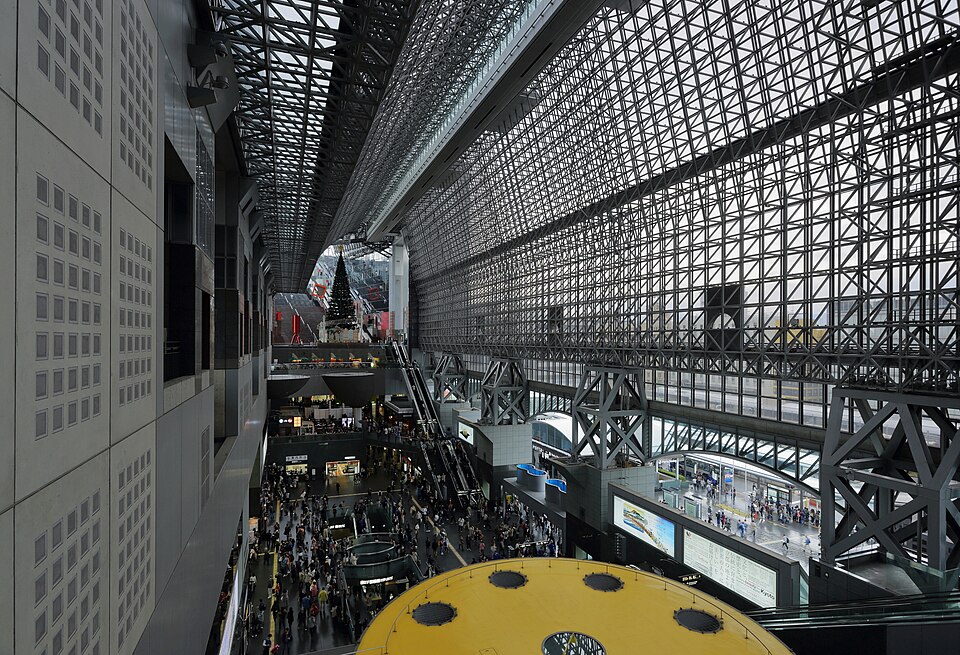
i
Martin Falbisoner, CC BY-SA 4.0, via Wikimedia Commons
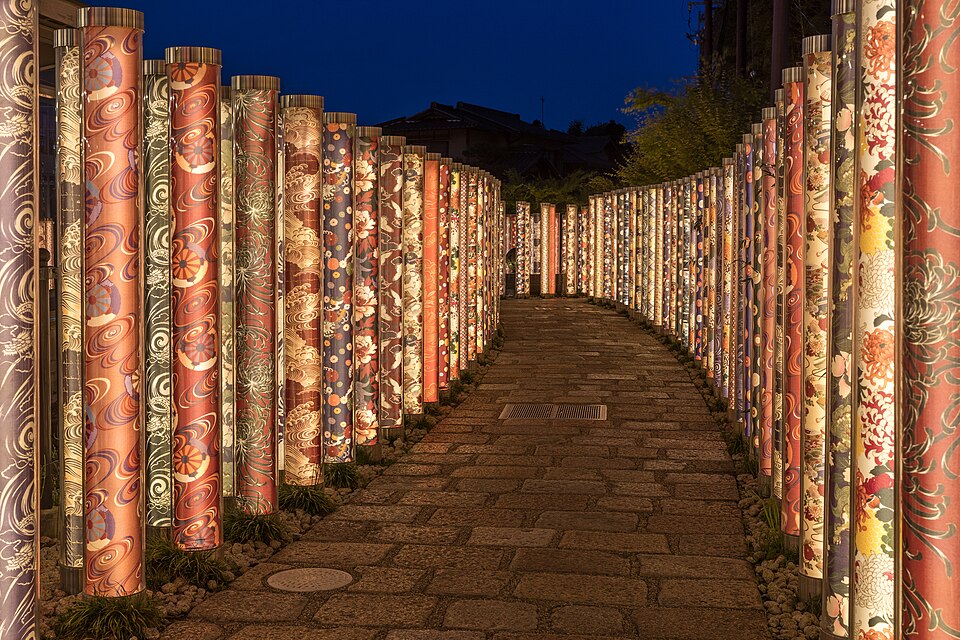
i
Yasumichi Morita (designer) Basile Morin (photographer), CC BY-SA 4.0, via Wikimedia Commons
What Kyoto is like
However, visitors may be surprised by how much work they will have to do to see Kyoto's beautiful side. More on Wikivoyage
- Worth seeing
- Kyoto offers an incredible number of attractions for tourists, and visitors will probably need to plan an itinerary in advance in order to visit as many as possible. More on Wikivoyage
- Worth doing
- Public baths have been a cornerstone of the society for centuries in Kyoto. Noblemen shared baths with commoners and warriors. More on Wikivoyage
- Getting in
- Kyoto does not have its own airport, but is served by Osaka's two airports, Kansai International and Itami. There is an excellent road and railway network between the two cities. More on Wikivoyage
From the Wikivoyage article on Kyoto, written by travellers and licensed CC BY-SA 4.0; the full article has far more. The numbers above are measured; this is experience.
Around Kyoto
Also in Japan
Nearby
Kind of place
Kyoto is in Japan, East Asia. Distances are great-circle, so a short one can still be a long way round.
Check your inbox. A confirmation is on its way: open the link in it, press Confirm, and you are subscribed.
That did not go through. Check the address, or try again in a minute.
Already sent. A confirmation went to that address in the last day: look for it, spam folder included. Its link works for three days.
You are not on the list until you confirm from your inbox. The list lives with our email provider, Resend; the privacy page says the rest.
Links marked Ad pay us a commission if you book through one, at no extra cost to you. That does not affect the scores on this page, which are computed from climate and fare data before any link is built.